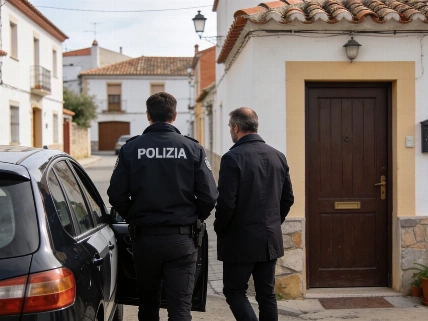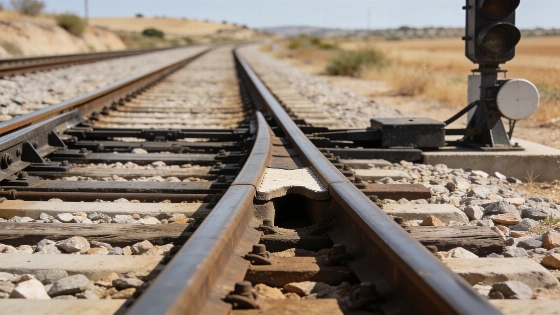
The 18 January collision near Córdoba on Spain’s Madrid-Seville high-speed line involved an Alvia and an Iryo train, killing 46 people and injuring more than 120. The initial technical account identified a broken rail as the immediate cause of the Alvia’s derailment into the path of the oncoming Iryo. The rebuilt section has since developed at least three deformations. That has renewed scrutiny of its maintenance.
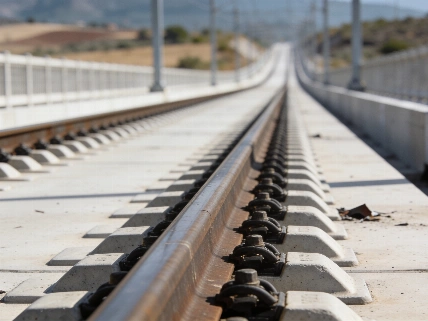
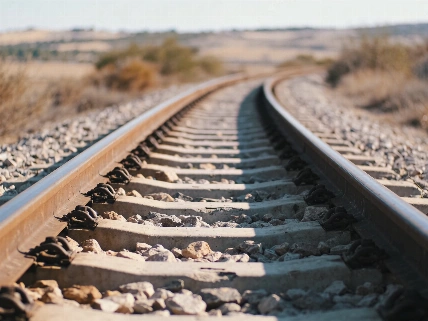
Adif asked the Court of First Instance of Montoro on 20 October for permission to carry out maintenance on switches 631 and 632 at the northern end of Adamuz station. The court-appointed experts did not object, saying the work would not interfere with their examination. The area under review includes the diverging track between approximately kilometres 316.900 and 317.500. The experts described at least three deformation points there: two classified as level IL and one as level AL. The proposed work involves tamping, a process that adjusts track alignment and level. They also noted that the switches had been included in an earlier renewal project involving the A645 device associated with the fatal rail break.
According to documents reviewed by EL PAÍS, the experts have asked the judge to obtain Adif’s inspection reports and records of checks on lines one and two, with particular attention to inspections carried out in October 2025 before the renovation. They also want post-emergency-repair maintenance reports and the complete file for the emergency works, saying they have not received documentation on that project. The A645 device was located at approximately kilometre 318.681, where the rail broke at the weld joining the existing rail to wire one of track one.
Adif renewed the switches on 19 December 2025, about 30 days before the Adamuz crash. The work was still within its guarantee period when the collision occurred, as fewer than two years had passed since completion. The request for maintenance came eight days before an accident at Urda in Toledo on the same Madrid-Seville line; an account of the Urda crash response reported how a local pharmacist helped at the scene. The Adamuz investigation remains open, with the judicial inquiry examining the infrastructure and its maintenance, along with the handling of physical evidence. On 22 and 23 January, four days after the collision, Adif personnel removed components including welded rail fragments. Judge Cristina Pastor later ordered the return of material held by Adif and prohibited the removal, transfer or testing of crash-linked components without court authorisation.
A separate question remains: how to inspect the Iryo train. It was parked and sealed at Villanueva de Córdoba. One option was to move it to Renfe’s La Sagra workshop in Toledo for an examination of its bogies, the structures connecting the axles to the wheels. Iryo warned that the journey could alter the axles’ current condition and that the workshop lacks the pits and lifting platforms needed for the inspection.
The company instead proposed separating the bogies from the car bodies and taking them by lorry to Alstom facilities in Madrid, where the necessary technical equipment is available. The road journey would take about 24 hours. Iryo said this option would also let it begin assessing repairs and the possible reuse of the car bodies.