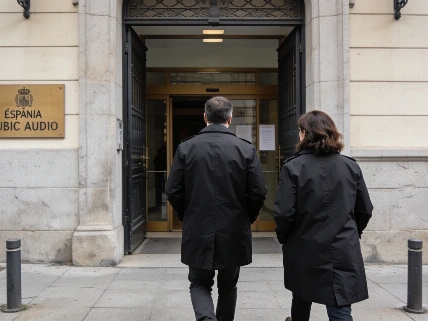
María Tardón has summoned Miguel Ángel Pérez Triano to appear on 18 November in the National Court investigation into the mass entry of migrants from Morocco into Ceuta on 30 and 31 July 2026. Pérez Triano is the first person formally placed under investigation in the case. The Spanish government estimated about 72,000 arrivals, while other estimates put the figure as high as 80,000. The crossings unfolded over roughly 48 hours, as people entered by crossing the border fence and swimming into the enclave.
He resigned as the Government’s delegate in Ceuta on 28 September. The summons is an investigative step and does not establish criminal responsibility. Judge Tardón is examining suspected offences relating to state peace and independence, including whether the mass entries were orchestrated from Moroccan territory.
RTVE Noticias reported the summons, citing legal sources. It follows the Government’s agreement to declassify reports prepared by the Centro Nacional de Inteligencia (CNI), which Tardón had requested. She sought CNI notes and reports circulated to authorities from 30 July 2026 concerning investigations into the events and the actions of Moroccan authorities. The Mixed Migration Centre reported that movements at the Morocco-Ceuta border had increased during the first half of the year before the July surge.
Tardón has also called two CNI members to give evidence. The head of the CNI delegation in Ceuta may appear as a witness. The summons is being handled in a sealed part of the case because the information is classified as reserved. ABC reported that Gonzalo Sanz, Pérez Triano’s former chief of staff, told investigators that a CNI officer warned him on 29 July about a social-media call in Morocco urging people to enter Ceuta illegally. The call had reportedly reached around 180,000 people, and Sanz said Pérez Triano was present during the call with the CNI.
Four protected witnesses of Maghrebi origin have already given evidence, including claims that Moroccan agents directed them towards the border. Their testimony, proposed by the National Immigration and Borders Center of the Spanish National Police (CENIF), lasted about three hours. One witness said he had not intended to enter Spain but was thrown into the sea and had to be rescued by the Guardia Civil. Witnesses also said a Moroccan police officer and a soldier crossed into Ceuta during the mass entry and stayed in separate shelters.
Their accounts are consistent with a Policía Nacional report pointing to the involvement of Moroccan agents. The CENIF report submitted to the judge said Moroccan armed and security forces actively directed crowds towards crossing points and referred to alleged prior and tactical planning. Investigators identified two senior Moroccan commanders in videos of the crossings, giving directions near the Bab Sebta crossing at Castillejos (Fnideq, Marruecos), close to the Tarajal border. The report places both within the highest level of the Moroccan authorities’ operational security command. These allegations remain part of the ongoing investigation.
The scale of the arrivals put humanitarian services under significant pressure. People who entered included refugees and unaccompanied children, alongside other migrants. The Mixed Migration Centre reported that roughly 70,000 people had returned to Morocco by 4 August, after many arrivals were left without adequate food or water. Seven temporary reception facilities were established around Ceuta as authorities managed the influx and subsequent returns.
The inquiry is separate from the Guardia Civil case involving an alleged Blocus founder in Picanya, covered in RUSSPAIN.COM’s earlier report.