Ceuta’s president has called the recent border incident an invasion, accusing Morocco of using migrants as leverage and Spain’s government of failing to act. The fallout exposes deep rifts over border control and national security.
Ceuta’s president, Juan Jesús Vivas, has sparked controversy by calling the recent mass entry of over 70,000 people into the city an invasion, not a migration crisis. Appearing on El Hormiguero, Vivas directly accused Morocco of orchestrating the event and criticized Spain’s central government for being unprepared and slow to respond. Official figures from the European Parliament and Reuters put the number of crossings during July 30–31 at around 80,000, an unprecedented surge.
Vivas was blunt in his accusations. He argued that Morocco deliberately used its own citizens’ desperation as a political tool, allowing thousands to cross into Ceuta. He described the incident as a calculated move, not a spontaneous migration, and said Morocco was using migration to pressure Spain. The Moroccan Ministry of Foreign Affairs has denied any involvement, saying there is no evidence of Moroccan authorities participating and rejecting attempts to blame Rabat.
Spanish intelligence (CNI) declassified a warning issued on July 29, indicating that a mass attempt to cross into Ceuta was being coordinated via social networks for July 30.
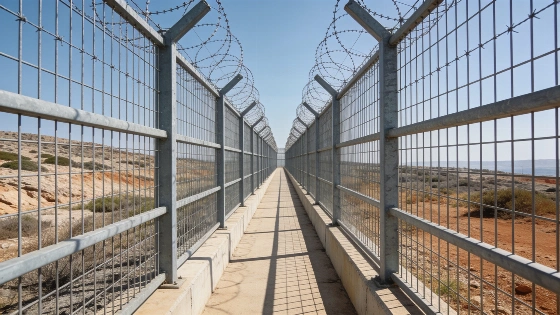
Vivas also criticized Madrid. He said Ceuta had warned the central government about rising attempts to swim across the border in the days before the incident, but the government did not act, leaving the city exposed. He called for urgent investment in border infrastructure so that control is not left to Morocco, which he described as unreliable. Reports from SpainEnglish and Euronews say Spanish and Moroccan intelligence services had received warnings about coordinated attempts to breach the border, including information about WhatsApp groups organizing the crossing.
Hundreds of Ceuta residents gathered in Plaza de los Reyes to watch the interview live on a giant screen, many waving local and national flags. Before the broadcast, the crowd held a minute of silence for those who died at Tarajal, blaming the Spanish government for failing to protect them. The sense of local solidarity was strong, with business owners funding the public viewing and residents bringing their own chairs to watch. Pressure on the border had been building even before the main surge: by July 30, official statistics showed that 1,272 migrants had already entered Ceuta in July, a 168% increase over the previous year, not counting the later mass entry.
While Vivas spoke on Antena 3, Prime Minister Pedro Sánchez was giving a separate interview on La Sexta. Vivas said he has no confidence in Sánchez’s ability to defend Ceuta or Spain, citing past failures. He also criticized Interior Minister Fernando Grande Marlaska for leaving Ceuta soon after promising to stay until the crisis was resolved. Vivas disputed the government’s figures, claiming up to 10,000 people remain in Ceuta, far more than the official estimate of 2,500.
Spanish police reports, as cited by RFI, mention 'undeniable facilitation' on the Moroccan side of the border, though this is an interpretation of internal documents and not an official admission by Morocco. Meanwhile, Reuters reported on September 14 that over 800 migrants were transferred from makeshift camps in Ceuta to a new accommodation center, indicating that humanitarian and administrative challenges persist weeks after the peak of the crisis.
Vivas called for immediate expulsions, arguing that European migration agreements allow for swift returns to Morocco, which is considered a safe country. He acknowledged that legal appeals could slow the process but said he was confident the National Court would move quickly. His position was clear: Ceuta, he said, cannot be left exposed to political maneuvering by its neighbor.
He ended the interview with a call for national solidarity, insisting that Ceuta’s struggle is Spain’s struggle. He urged the government to listen to the city and act decisively. The interview’s impact was amplified by the public viewing and the charged atmosphere in Ceuta’s main square.
This confrontation comes as Spain’s relationship with Morocco faces renewed scrutiny. The use of migration as a diplomatic tool is not new, as seen in other recent events involving Moroccan leadership, such as the controversy over King Mohamed VI’s presence in Paris during a national crisis. The Ceuta episode highlights the fragility of border arrangements and the risks of relying on external partners for national security.
Spain’s enclaves in North Africa have long been flashpoints for migration and diplomatic tension. Ceuta’s demand for stronger border infrastructure and less dependence on Morocco reflects wider concerns about sovereignty and control. The government’s muted response and disputed figures add to the uncertainty. As the situation develops, the question is whether Madrid will deliver concrete solutions or if Ceuta’s warnings will be ignored again. The events in Ceuta show that border security is not just a local issue but a national challenge with international consequences.