At the Asturias Awards in Oviedo, Felipe VI argued that human experience gives knowledge a moral dimension AI cannot provide on its own. He also urged voters to protect democratic institutions ahead of the November 29 general election.
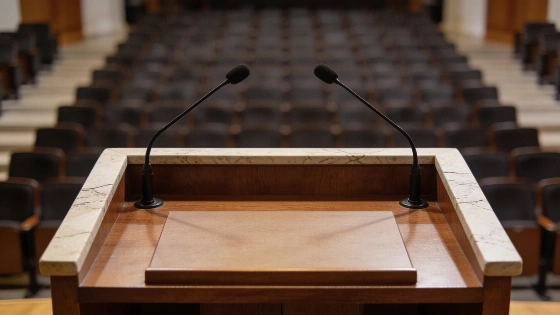
The general election scheduled for November 29 put citizens’ responsibility at the centre of Felipe VI’s address at the Teatro Campoamor in Oviedo. On Friday, October 23, the King delivered the closing address at the 46th Princess of Asturias Awards ceremony. He said voters would determine the country’s political direction and urged them to care for the institutions that support democratic life.
He described democracy as something that requires daily civic commitment and careful stewardship of its institutions. The King said democracy does not end with elections: its forms and institutions must be cared for to safeguard coexistence. He also recalled Spain’s Transition from dictatorship to freedom, describing it as a complex process made possible by generosity and a willingness to look beyond immediate differences. The 1978 Constitution, he said, was designed to include all Spaniards without distinction.
His other central theme was the distance between information and lived understanding. Felipe VI described artificial intelligence, and the possibility of its future evolution into what is called superintelligence, as able to absorb human knowledge and return it in synthesized form with extraordinary speed. He questioned whether it could also learn gradually over time, reconciling knowledge with moral learning shaped by age and experience, including consideration for others. The question was philosophical, not a technical finding about the capabilities of current AI systems.
That distinction framed his praise for the award recipients. Their achievements, he said, reflected talent developed through sustained effort and constancy. Experience itself cannot simply be passed on or explained; it has to be lived. The King also stressed the importance of time and patience, with trust central to the pursuit of lasting goals.
Queen Emerita Sofía and Paloma Rocasolano, Letizia’s mother, attended the ceremony. Leonor, Princess of Asturias, had taken on a separate public role earlier that Friday, presiding alone over the official reception for the award recipients. As honorary president of the Princess of Asturias Foundation, she continues her education while gaining experience, Felipe VI said, adding that he was proud to see her taking firm steps in the role. He also referred to Infanta Sofía’s learning and development.
To close his address, the King referred to Jorge Luis Borges, whose death marked its 40th anniversary in 2026. He recalled Borges’s description of writing as a form of dreaming that should be done sincerely, then connected that idea to human work and creative effort.