Around 1,700 migrants spent their first night at Ceuta’s port after being moved from nearby beaches. The operation has triggered a legal challenge and renewed the political fight between the PSOE and PP.
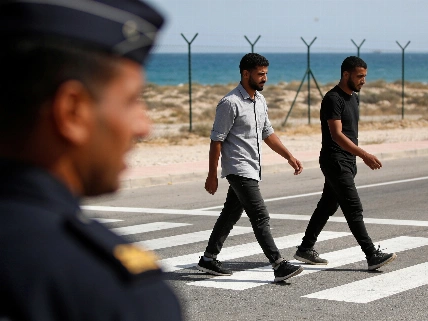
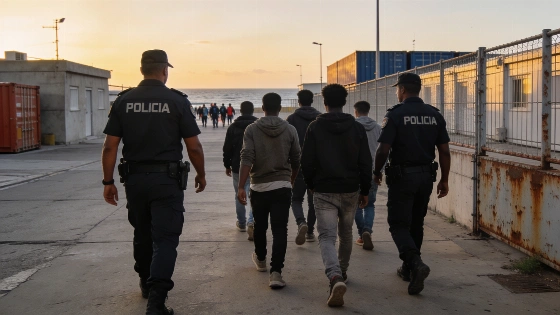
Around 1,700 migrants spent their first night at the Port of Ceuta after police began moving them from the beaches of El Trampolín and Benítez on the morning of 18 September. Reuters reported that the authorities had prepared temporary facilities inside the port to ease pressure on the beaches and streets. This is emergency accommodation, not a permanent centre.
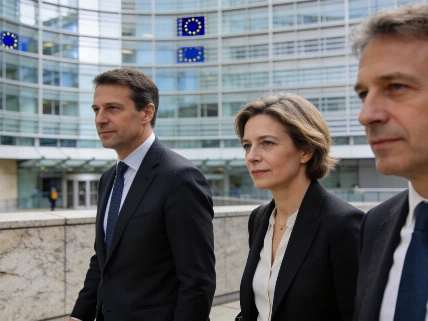
The transfer has opened a legal front. The Audiencia Nacional admitted a challenge filed by the Sindicato Unificado de Policía. The PSOE has also accused Ceuta president Juan Jesús Vivas of following Alberto Núñez Feijóo’s orders during the migration crisis.
The court has not issued a final ruling on the relocation. It has admitted the appeal against the Ministry of Transport’s decision to make port land available for migrants who remained on the beaches after the mass entry at the end of July. That leaves the launch of the port facility under temporary legal uncertainty.
On 13 September, 864 migrants were transferred to a separate temporary shelter in the Los Rosales area. The Ministry of Inclusion and Migration described that operation as humanitarian and said it was voluntary and passed without serious incidents.
The police operation changed the immediate setting of the crisis overnight.
Rebeca Torró launched the political attack during the opening of the PSPV-PSOE Political Conference in Alicante. The PSOE’s secretary of Organisation said Vivas had moved from cooperating with the Government to obstructing its handling of the crisis. She also accused Feijóo of becoming a bad virus infecting Spanish politics and its leaders.
Torró aimed her criticism at the PP leadership and the Ceuta government. She asked why Vivas and the PP were competing with Vox while abandoning the interests of Ceuta’s residents for their own political priorities. Her argument was that the dispute over the migrant transfer shows a break with the earlier cooperation between Vivas and the central Government.
The number of people still in Ceuta has changed through transfers and returns. Africanews reported that more than 5,321 migrants had voluntarily returned to Morocco since 10 August, while around 90 had withdrawn asylum requests and nearly 1,000 were in the process of being registered for return.
The Partido Popular has renewed its demand in the Senate for appearances by Fernando Grande-Marlaska, Margarita Robles and José Manuel Albares. The ministers responsible for Interior, Defence and Foreign Affairs did not appear in the upper chamber in August to explain the Ceuta crisis. They chose to give their explanations in Congress.
That decision has made the Senate request another source of pressure on the Government. It also puts the port transfer inside a broader dispute over who should explain the response to the crisis and which institution should take responsibility for it.
The legal challenge and the political dispute are moving in parallel. The Sindicato Unificado de Policía is contesting the use of port land. The PP is pressing ministers to appear, while the PSOE is attacking Vivas for opposing the Government’s approach.
For Ceuta, the practical change is immediate. Migrants who had been staying on two beaches have been moved to temporary accommodation at the port. The material provided does not establish how the court will resolve the appeal or what further measures will follow, so those questions remain open.
The relocation has not closed the crisis. It has moved part of it into the courts and intensified the open dispute between the PSOE and PP. Migrants have been transferred, a police union is challenging the decision and ministers are again facing political demands to appear. The episode now goes beyond emergency management. It has become a test of institutional coordination in Ceuta, with the Government’s decision facing legal scrutiny and direct party confrontation.