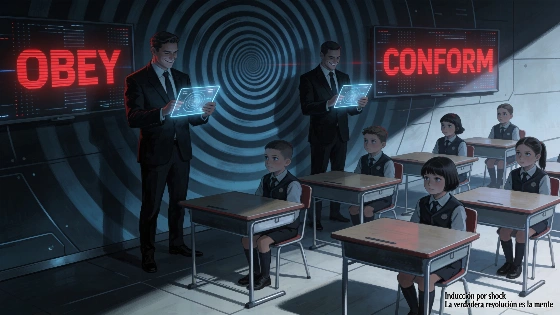
Chuck Palahniuk, known for provocative storytelling, has released his latest novel, 'Inducción por shock'. Set in 2032, it follows a fragmented narrative centered on Greener Pastures, a corporation that monitors and auctions highly gifted children for top positions in companies and governments. The basic character, Samantha Deel, comes from a disadvantaged background and is selected for a future as the Queen of England, underscoring the novel's sharp critique of American meritocracy and social mobility.
In 'Inducción por shock', Palahniuk uses an intense structure and psychotropic elements, including drugs and hypnosis techniques. The author, who recently visited Spain for the Celsius 232 festival in Avilés, explained that the title refers to a hypnotic method in which a sudden physical gesture induces sleep. The theme runs throughout the novel, reflecting literal and metaphorical forms of control and manipulation.
Several film adaptations of Palahniuk's works are in progress, but he remains largely uninvolved in Hollywood projects, preferring to focus on writing. He is, but, collaborating with David Fincher on an 800-page book about 'El club de la lucha', featuring extensive interviews with people involved in the film. Palahniuk's connection to cinema began with Fight Club, his 1996 debut novel, which Fincher adapted into a 1999 film starring Edward Norton and Brad Pitt, with Helena Bonham Carter also in the cast. Clark Gregg also adapted Palahniuk's novel Choke for the screen. Despite the cinematic qualities of his novels, Palahniuk says he draws more inspiration from action-driven literature than from movies, though he acknowledges film editing's influence on his narrative style.
The fragmented structure of 'Inducción por shock' did not result from its initial serialization on Substack. Palahniuk chose it to incorporate authentic information about hypnosis. He attended the Hypno-Thoughts convention in Las Vegas, where he observed clear differences between male and female hypnotists: men tended toward entertainment, while women focused on therapy. He was particularly struck by the use of classical rhetoric in hypnosis, which he compared with poetry and public speaking.
The novel also reflects the fractured attention spans of the digital age. Palahniuk says concerns about declining focus are nothing new: decades ago, rapid-fire music videos were blamed for eroding attention, yet society adapted. Today, smartphones and internet culture continue to shape how people process information, a theme woven into the book's rhythm and pacing.
Palahniuk is set to make his science-fiction debut with 'Galleria', scheduled for release in the United States in January. The story follows a young man searching for his estranged father, a failed science-fiction writer, through second-hand bookstores. The novel uses a 'fix-up' format reminiscent of Ray Bradbury's 'Crónicas Marcianas', connecting separate stories in a cohesive narrative about discovery and aspiration.
In 'Inducción por shock', Palahniuk explores the monetization of intimacy through platforms like OnlyFans and the blurred lines between economic transactions and emotional connections. He draws on themes from his earlier work 'Snuff', highlighting the dangers of mistaking transactional relationships for genuine affection. The novel also addresses generational anxieties, particularly the pressure on young Americans to meet societal expectations, which can lead to early burnout and disillusionment.
Palahniuk remains optimistic about society's ability to adapt and expresses little concern about attention-span issues. Instead, he sees the flood of low-quality imitations that follows the success of popular books as a greater threat to literary culture. He also reflects on how literature has changed, noting that the era of lengthy serialized novels has passed as people have less free time and payment models have shifted.
His observations extend to public figures: he suggests some leaders may seem hypnotic because they can bore audiences into a trance-like state. 'Inducción por shock' is a dark satire of the pressures facing young people and the illusion of meritocracy, while examining how power and influence are changing in the United States.
Recent developments in Spanish culture and media have also kept the effects of health challenges on public figures in the spotlight. One example is José Luis Gil's absence from 'La que se avecina' due to health reasons, detailed in this report on the actor's family statement.