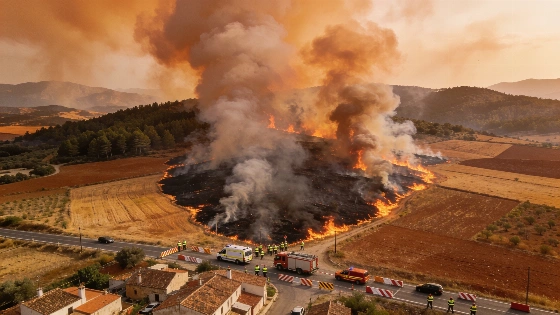
After three days, crews had yet to bring the Cinco Villas wildfire under control. Unpredictable winds and challenging terrain continued to complicate containment efforts. On Friday, emergency teams stopped the flames from reaching residential areas in Luesia, while alerts remained in place in Biel and Isuerre, as well as Lobera de Onsella and Longás.
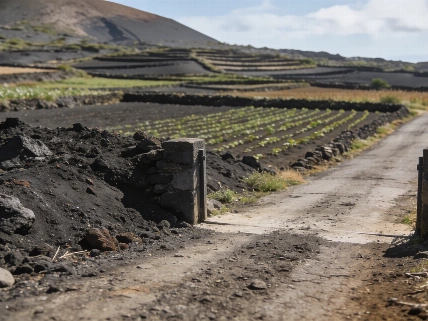
Authorities reported that no new evacuations were ordered during the latest operational period. Earlier evacuations covered Orés and Asín, along with Luesia and Malpica de Arba. They also included Uncastillo and the Navarrese town of Petilla de Aragón. Shifting winds and a field that combines farmland with forest, ravines and scrubland complicated the work of ground and aerial crews.
Transport in the region was also affected. Seven road sections, A-1204, A-1202, A-1203, CV-628, CV-813, CV-841 and CV-850, were closed to traffic as a precaution, limiting access to several rural communities and hampering local mobility. The closures were expected to remain in place until conditions improved and the fire risk subsided.
The blaze came amid a series of severe wildfires in Spain in recent years. An earlier fire in Orés prompted the evacuation of five towns and destroyed more than 12,000 hectares, as detailed in a related report on the Orés wildfire crisis. The current situation in Cinco Villas shows how exposed rural areas are to fast-moving fires, particularly when weather conditions turn adverse.
Later assessments placed the Orés fire within an exceptionally severe Aragón wildfire season. Regional environment minister Luis Biendicho described the 2026 campaign as “extraordinarily complex.” Aragón recorded five major forest fires that burned 35,675 hectares. The Orés fire affected Orés and Asín, along with Ejea de los Caballeros, Luesia, Biota and Uncastillo. Across Spain, fires affected more than 270,000 hectares in 2026, including about 60,000 hectares of agricultural land. The national government approved €9 million in aid for affected agricultural holdings. Agriculture Minister Luis Planas cited the “exceptional severity” of a season marked by major wildfires.
After the fires, crews in Cinco Villas took steps to limit soil loss and support vegetation recovery. They built small barriers in ravines and gullies, placed fascines on slopes and spread straw over exposed soil. They also shredded wood debris on site. Restoration planning considered erosion risk and slope, along with soil characteristics, natural regeneration capacity and access difficulties. Representatives of the six affected municipalities submitted proposals on restoration and prevention, as well as future emergency response. Biendicho said, “The best forest policy is one that trusts its professionals.”
The fires also prompted regional aid for small businesses and self-employed workers. The Aragón government received 44 applications, including 18 from the Orés-Cinco Villas area. Those applicants sought €80,397.90, of which €74,670.78 was initially considered eligible. Together, the Orés-Cinco Villas and Las Peñas de Riglos areas accounted for 42 applications, or 95.5% of the total. The regional Department of Economy, Competitiveness and Employment said each application would be assessed individually to determine whether losses were directly linked to the fires and whether the documentation was complete.
The legal structure for regional compensation came under Order ECE/1370/2026 of 23 September. It set urgent rules and opened subsidies to repair damage and compensate losses caused by the summer fires. The measure was listed in the National Commission on Markets and Competition’s state-aid register as SA.125095. Later consultations between the regional government and local representatives also covered restoration needs and preparation for future fires. The response thus extended beyond immediate suppression to land management and local economic recovery.
Wildfires repeatedly threaten Spain, particularly in regions where farmland meets forest. Dry conditions and variable winds, combined with complex topography, can lead fires to spread quickly and make containment difficult. Local authorities typically deploy specialized firefighting units and coordinate evacuations when needed. Road closures are a standard way to protect residents and emergency personnel.