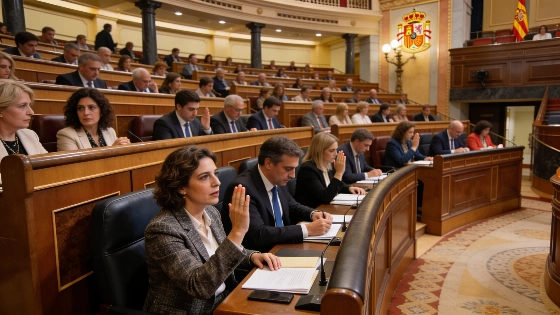
Spain’s Congress has voted down the government’s emergency decree on lobbyist regulation, leaving Madrid unable to meet EU transparency deadlines. Meanwhile, a major support package for Ceuta has passed with broad backing.
Spain’s government lost a key vote in Congress after lawmakers rejected its emergency decree to regulate lobbyists. The defeat, led by PP, Vox, Junts, and UPN, blocks Madrid from meeting European Union requirements tied to transparency and accountability. RTVE reports that on September 16, 2026, 179 deputies voted against the decree, 155 supported it, and 12 abstained.
With the vote, the government’s regulation—approved just weeks earlier in August—is now scrapped. This stops the creation of a formal lobbyist registry and disrupts Spain’s timeline for meeting EU-mandated reforms. Newtral notes the decree had already set up a mandatory state register for interest groups, aiming to resolve a reform that had stalled for years.
The failure to pass the lobbyist regulation puts at risk approximately €1.5 billion in European funding linked to transparency and accountability commitments.
In contrast, Congress gave strong support to a separate decree for Ceuta. Only Vox opposed it, and Junts abstained. The measure passed with 304 votes in favor, 33 against, and 7 abstentions, unlocking €309 million for the city for the rest of the year. The funds are earmarked for humanitarian aid for minors, security, and direct support for businesses and workers. RTVE reports the breakdown as €118 million for minors and humanitarian needs, €90 million for security, and €80 million for business and labor support.
The failed lobbyist decree would have defined what counts as a lobby group, introduced a “regulatory footprint” report to track their influence on lawmaking, and set up a sanctions system. Minister Óscar López said the government’s summer push was a response to delays in the broader bill first introduced in 2025. In less than a month, the now-canceled registry had received over 300 registration requests and more than 3,000 queries. Democrata and Newtral highlight that clear definitions, the regulatory footprint, and sanctions were the main innovations in the decree.
The Ceuta decree, led by Vice President and Economy Minister Carlos Cuerpo, was described as essential for restoring normality in the city. A dedicated €36.6 million fund will provide direct grants—€5,000 for self-employed people and between €10,000 and €150,000 for companies—managed by the tax agency. As of this week, 633 applications had been received, with payments expected to start on October 6.
Democrata highlights that the government resorted to an accelerated decree in August 2026 after more than a year of parliamentary deadlock on the broader transparency bill, which remains pending in Congress.
Other measures include €14 million to support small retailers and tourism, a consumption voucher scheme, and labor relief such as full exemptions for companies forced to suspend activity, extra benefits for self-employed workers, and a 0.5% rate for deferred social security payments. Permanent changes will also affect Melilla, raising the indefinite hiring bonus from 50% to 75%, increasing corporate tax breaks for resident entities from 50% to 60%, and easing expense deductions for the self-employed.
Spain’s failure to pass the lobbyist regulation now puts the government in a difficult position with Brussels, risking delays or complications in accessing EU recovery funds. The contrast with the quick approval of the Ceuta package shows the shifting alliances and priorities in the current legislature. This episode highlights the limits of executive power when faced with parliamentary resistance and the unpredictable dynamics shaping Spain’s legislative agenda in 2026. EFE and Infobae report that the government itself admitted support for the reform was uncertain even two days before the vote.