Mass Protest Against the Government Held in Madrid Amid Zapatero Case. A large-scale protest against the Sánchez government took place in central Madrid. The demonstration coincided with reports on the Zapatero case and demands from the opposition to ramp up pressure. Authorities and parties are responding to the situation.
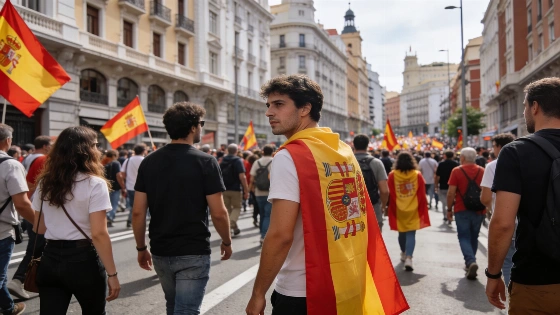
A large-scale protest against the current government of Pedro Sánchez took place in central Madrid in the morning. Hundreds of participants gathered at Plaza de Colón and marched through the main streets of the city, demanding early elections and accusing the authorities of corruption. Tensions were heightened by recent news that a case was opened against former Prime Minister José Luis Rodríguez Zapatero on charges of influence peddling and ties to the airline Plus Ultra.
The "March for Dignity" was organized by the Sociedad Civil Española association, which brought together more than a hundred organizations. The protest had been planned in advance, but a decision by National Court judge José Luis Calama, announced the day before, gave the event additional resonance. Representatives from Vox, Partido Popular, and the Se Acabó la Fiesta movement took part in the march. Among the prominent figures were Vox leader Santiago Abascal, PP senator Alicia García, and SALF head Alvise Pérez. Víctor de Aldama, involved in the Koldo case related to the Plus Ultra investigation, was also spotted at the protest.
The column set off at 10:30 from Plaza de Colón, moving along Genova, Sagasta, and Princesa streets, ending at the Moncloa Arch. Leading the way were Sociedad Civil Española leaders, including Marcos de Quinto, as well as politicians such as Vox MEP Juan Carlos Girauta and former Madrid Community president Esperanza Aguirre. The main slogan of the march was: "Corruption has a price, enough impunity, elections now." Vox stood out with its own tent and a separate banner calling for a change of government.
At the start of the rally, Santiago Abascal stated that his party is demanding the arrest of Zapatero, since Vox is acting as a private prosecutor in the case. In addition, the party insists on calling several ministers as witnesses in court. Abascal stressed that he does not intend to raise the issue of a vote of no confidence so as not to distract from the core of the protest, but hinted at the difference in capabilities between Vox and the Partido Popular, noting that Vox does not have the required number of deputies to launch the initiative on its own.
The position of the Partido Popular was voiced by Senator Alicia García. She said the party intends to summon Zapatero's secretary, Gertrudis Alcázar, to the hearings, whom the court considers a key figure in the alleged scheme. García also reminded that four votes are lacking to file a motion of no confidence, and PP leader Alberto Núñez Feijóo sees no point in a doomed initiative. According to her, further actions will depend on the publication of case materials expected in the coming days.
The context surrounding the protests in Madrid highlights growing tensions between the opposition and the government amid corruption investigations. Such mass rallies have repeatedly provided grounds for political statements and pressure on the authorities. As an analysis of other conflicts within Spanish parties, internal disagreements and court cases often act as catalysts for new waves of protest.
For reference: Plus Ultra is a Spanish airline that found itself at the center of a scandal due to its connections with Venezuela and suspected corruption. The Koldo case is related to an investigation into procurement during the pandemic period and also involves a number of high-ranking officials. In recent years, Spain has seen increased attention to issues of transparency and government accountability, reflected in the rise of protest actions and parliamentary investigations.