All 69 people killed in the Urda crash have been identified, but the Civil Guard continued searching the site for biological remains. The full death toll is confirmed, though the search operation had not yet ended. The collision occurred at about 08:53 on 28 October near kilometre 118+800 of the Madrid-Seville high-speed line, between Los Yébenes and Urda in Toledo province. The trains were Renfe AVE 02080, carrying 397 passengers, and Iryo service 6076, carrying 147.
The Institute of Legal Medicine and Forensic Sciences of Toledo and Ciudad Real identified 40 men and 29 women. All were adults. The victims included 54 Spanish nationals and 15 people from other countries: one Argentine, two Australians, one Canadian, one Czech, four Americans, one French citizen, two Japanese, one Mexican, one Portuguese and one Tunisian.
Investigators identified 56 people through fingerprints examined by the Civil Guard’s Criminalistics Service. The other 13 were identified through DNA analysis by the National Institute of Toxicology, working with that service. Families had been notified in every case, along with the relevant consular offices for foreign nationals. The remains of 55 victims had been placed at the disposal of their families.
The authorities added each identification to the official statistics only after the family had received personal, in-person notification and officials had formally confirmed it. A previous account named police officer Iván Romano Ramos among those killed in coverage of the crash.
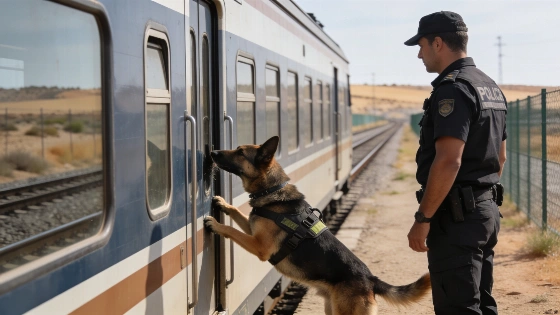
About 50 Civil Guard personnel continued the search at the site on Monday. Teresa Albacete, the force’s spokesperson in Urda, said the canine unit would keep searching the cleared track area until officials formally concluded the operation.
That clearance followed the removal of the final two Iryo carriages, numbers seven and eight. Cranes lowered the carriages one by one into a secure area for another search by dogs. The AVE carriages had been moved there the previous night.
The Civil Guard said transport of the carriages by low-loader was scheduled to begin on Tuesday. They would then remain available to the judicial authority. Repairs to the track would wait until the final search sweeps were complete, and the search was expected to continue at least through Tuesday. A judge’s order kept the site closed to public access while evidence was collected.
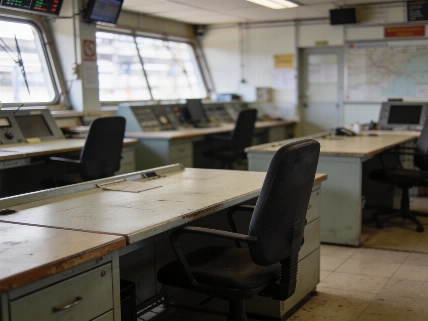
The judicial inquiry and Aitat’s independent technical investigation proceeded in parallel. Investigators were examining communications between the drivers and Adif’s control room at Madrid Atocha, the LZB safety system and safeguards against a moving train striking one that had stopped. Preliminary reporting said the Iryo train was stopped at signal E242 when the AVE struck it from behind. An initial technical account put the AVE’s speed between 160 and 200 km/h. The cause remained under investigation.
At the site, Civil Guard officers laid flowers and observed a minute’s silence beside an oak tree near the crash location. Albacete said the spot was outside the judicially established perimeter, so people could leave flowers or other tributes.