DNA testing has identified 25 victims in the Cuelgamuros crypts. Their remains are returning to families after decades without answers, while researchers continue work on 602 bodies from 21 locations.
In 2003, residents of Pajares de Adaja opened a grave in Aldeaseca and found that seven people executed in August 1936 were no longer there. Archive records later showed that the remains had been moved to Cuelgamuros in 1959. The case began with box 198.
The box also contained the remains of five men from Navalmoral de la Sierra. Their bodies had first been placed in a grave at Fuente el Saúz. The two groups were later transferred together, without notice to their families or their permission.
The forensic programme is not limited to the 25 people already identified: families have formally requested the recovery of 214 individuals whose remains may be in Cuelgamuros.
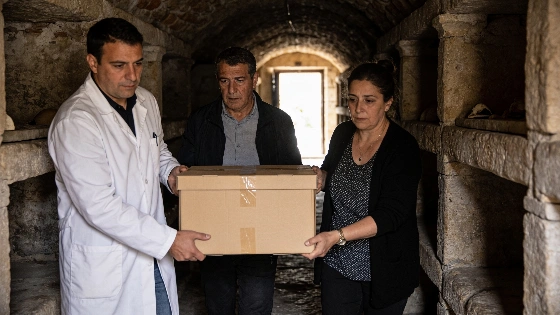
Researchers eventually found box 198 in the Santo Sepulcro crypt. A legal battle had lasted two decades. RTVE reported that the 1959 transfers are central to the case because many families were neither consulted nor informed.
The remains were still suitable for examination. A watch, a lighter, fragments of espadrilles and buckles helped establish the burial context. DNA testing then identified 11 people in the summer of 2023.
Seven came from Pajares de Adaja: Víctor Blázquez del Oso, Valerico Canales Jorge, Emilio Caro García, Román González Enríquez, Pedro Ángel Sanz Martín, Flora Labajos Labajos and Celestino Puebla Molinero. They belonged to the town's Casa del Pueblo, which was linked to UGT. Rebel forces executed them on 20 August 1936.
Four of the five men from Navalmoral de la Sierra were also identified. They were Gregorio Pérez del Peso, Raimundo Meneses Redondo, Rito Martín Redondo and Fernando Jiménez de la Parra. The fifth man remains unidentified.
The crypts contain approximately 33,800 remains, and more than 12,000 are still unidentified. The figures show why the current work is a continuing forensic programme rather than a single exhumation operation.
Families received the remains at a ceremony in Pajares de Adaja on 20 August 2023. Fausto Canales called the occasion an act of peace. Juan Luis González said it brought a family grief to a close, even though that grief had spread across the wider community.
Some relatives waited for DNA results from 2023. RTVE reported that pressure on the forensic system delayed the work. The process is still moving.
Another group arrived at the basilica on 8 April 1959. Boxes 2.034 and 2.035 held the remains of 17 people executed in August 1936 in the Zaragoza area of Campo de Borja.
Four were identified in 2025: Esteban Giménez Ezpeleta, Juan Chueca Sagarra, Felipe Gil Gascón and Pedro Peralta Gil. Escolástico Gomara Redrado and Félix Bona Ruberte were identified later. Estanislao Bosque Gil and Benito Barcos Laborda were identified in 2026.
The other remains were buried in a pantheon in Magallón. A plaque was installed at Borja cemetery.
The identifications also include people who fought on the rebel side. Casimiro Muñoz del Valle died from war wounds in Zaragoza in 1937. Researchers recovered him from box 106, and his remains were later buried in his family grave in Aldea de San Miguel.
José Severo Arregui Lasa and Cecilio Ruiz de Loizaga Urigoitia were returned to relatives in San Sebastián in January 2026. Florencio Fernández de Larrinoa Martínez de Zestafe and Constancio Allende Sancho were also identified. Luis Domenech Rivas became the first person identified through the DNA of a deceased relative.
The list is not closed. Families, including the relatives of brothers Ramiro and Manuel Lapeña Altabás, are still waiting for comparisons with recovered remains.
The 2016 ruling on the Lapeña family's request made the Cuelgamuros exhumations possible. Since then, the work has shown that the crypts are not an inaccessible archive. Documented identities can still be restored there.
Researchers have now identified 25 victims through DNA testing at the Valle de Cuelgamuros. Their remains have been handed to relatives who requested them. Families can decide where and how to bury them.
The wider task is much larger. Forensic teams have recovered 602 bodies from 21 localities across three crypt levels. According to RTVE, levels 0, 1 and 2 have been examined so far.
Approximately 33,800 remains are held in the crypts. More than 12,000 are still unidentified. Families have formally requested the recovery of 214 people whose remains may be there.
That work continues. Returning the remains repairs a decision made without family consent, and the evidence already recovered supports testing every possible identification.