Eduardo Rodríguez 'Rodway', Triana's founding guitarist, died at 81 in Cádiz. He was the last surviving member of the original lineup, and his death closes a long fight over the band's name.
Rodway died on 26 September 2026 at the Hospital Universitario de Puerto Real. His family confirmed the death in a statement reported by several Spanish media outlets.
He was 81. The death leaves no surviving member of Triana's original lineup. Jesús de la Rosa died in 1983, and Juan José Palacios 'Tele' died in 2002.
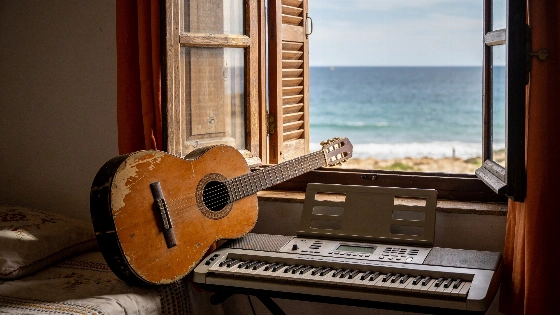
Rodway had lived for years in Caños de Meca. He kept several guitars there but could barely play because of arthrosis. In recent years, he used a keyboard instead and sometimes returned to the opening lines of Abre la puerta.
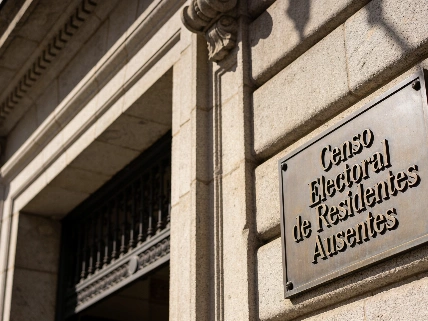
In 2026, Spain’s Supreme Court rejected Rodway’s challenge to the use of the Triana name, leaving in force the lower courts’ decisions and bringing the long-running dispute to its final judicial stage.
The court fight had become personal. Triana continued to perform and record for years without any founding member. Rodway said those musicians were not the group he had created with De la Rosa and Tele.
He lost the case after what the source describes as a complex bureaucratic turn. He kept defending the trio's original identity in repeated Facebook messages and in his book Triana. A través del aire. El origen y la esencia del grupo andaluz más universal.
The dispute began with a reluctant agreement. In 1994, Tele asked Rodway if he objected to reviving Triana with replacement musicians. Tele needed the income. Rodway agreed while Tele was alive, although he opposed the idea.
After Tele died, his widow inherited the group's registered name. She allowed the hired musicians to keep performing under it. Independent reports date Tele's death to 2002.
The argument was about more than a name. It concerned authorship, memory and ownership of a sound that helped shape Spanish music in the 1970s. EL PAÍS reported that Rodway viewed his consent as limited to the period when Tele was alive.
Later reports on the case said Rodway failed to prove rights to either the trademark or the songs as one collective object. The registered name was instead linked to Tele's registration and later to his heirs.
Triana is widely described in Spanish obituaries and cultural coverage as one of the key reference points of rock andaluz and one of the country’s most influential groups of the 1970s. Its continued use of the name by musicians who joined later is what kept the dispute over legacy and authorship alive.
Rodway was born in Seville in 1945. British and American rock records reached US military bases in Andalusia, and they first drew him toward the electric guitar.
He later turned to Spanish guitar and joined Los Payos. The group found success with songs such as María Isabel. His meeting with De la Rosa and Tele led to a more ambitious project.
Triana released its first album, El patio, in 1975. It sold only a small number of copies at first. The record joined flamenco with progressive rock while Spain was still under Franco's dictatorship.
Rodway moved between electric experiments and Spanish flamenco phrasing. De la Rosa brought the distinctive voice. Tele developed a percussion style shaped by the solemnity of Holy Week processions.
The breakthrough came with Hijos del agobio in 1977 and Sombra y luz in 1979. Songs such as En el lago, Hijos del agobio, Quiero contarte, Tu frialdad and Una noche de amor desesperada carried Triana into the mainstream.
The group appeared on Los 40 Principales. It influenced bands such as Alameda, Guadalquivir, Cai and Mezquita.
Triana ended after De la Rosa died in a road crash on 13 October 1983. His Citroen BX collided with a van on a road in Burgos. The singer had performed at a solidarity concert for people affected by flooding in the Basque Country.
Rodway and Tele were travelling in separate vehicles. Both survived.
Rodway later released two solo albums, including one dedicated to De la Rosa. They attracted little attention. He retired professionally in 1987.
His final years gave the story a clear shape. The guitarist who helped create Triana could no longer play freely. The name he saw as inseparable from its founders continued on stage without them.
That was the final divide. Rodway's death removes Triana's last original custodian. The band's artistic legacy now remains split between its recordings and the disputed name still used by later musicians.