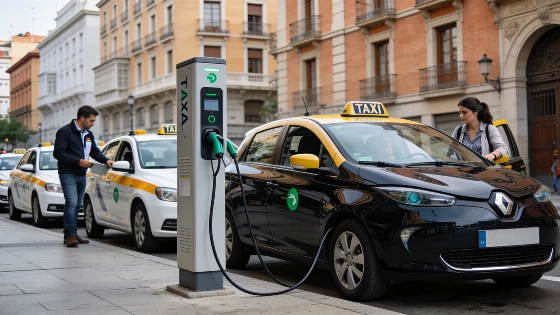
Electric taxis make up just 5% of Spain’s 61,000-vehicle fleet. Even with lower running costs and local incentives, most cities see slow adoption. Some regions, however, are moving faster than others.
Electric taxis continue to represent only a small fraction of Spain’s taxi fleet, with just 3,600 battery-powered vehicles out of 61,000 in circulation, according to Ideauto. Despite the clear cost advantages and reduced emissions, the transition away from combustion engines remains slow in most cities. The national average stands at 5.9%, but there are notable exceptions such as Bilbao, where nearly a quarter of taxis now run on electricity.
In 2025, the number of electric taxis sold nearly doubled compared to the previous year, reaching 1,078 units out of 7,769 total taxi sales. This surge pushed the share of electric taxis sold to 13.8%. However, the overall market for electric vehicles in Spain also grew, albeit at a slower pace, with electric cars accounting for 9% of all new registrations. The contrast is even sharper when compared to the VTC sector, where 60% of new vehicles are electric, highlighting a faster shift among ride-hailing services.
Local incentives have played a key role in cities leading the transition. Bilbao’s rapid adoption was driven by a municipal grant of €10,000 per vehicle, a measure that has since ended but left a lasting impact. Madrid, with 1,384 electric taxis—8.6% of its fleet—also benefits from national subsidies such as the Auto+ programme, which offers up to €7,000 per vehicle, alongside VAT refunds. Other cities like Vitoria and Zaragoza have introduced similar grants, though delays in payment have frustrated some drivers. In Zaragoza, demand for the €10,000 subsidy consistently exceeds the annual quota of 20 vehicles.
Some regions are advancing more quickly. Pamplona has 15% of its taxis running on batteries, while San Sebastián stands at 12%. Yet in areas with high tourist traffic and longer daily routes, such as Mallorca, the Canary Islands, and Málaga, electric taxis remain rare. In Málaga, only 49 out of 1,446 taxis are electric, as drivers often cover up to 800 kilometres a day—well beyond the typical 400–500 kilometre range of most electric models.
Cost remains a decisive factor for many drivers. Those who have switched to electric highlight savings on fuel and maintenance, with electricity costs significantly lower than diesel. However, concerns persist about battery life over the long term and the higher upfront price of electric vehicles, which can be around 30% more than their diesel counterparts. Insurance costs have also risen, with premiums for electric taxis increasing by 30% in recent years, sometimes reaching €3,000 annually for comprehensive coverage.
Charging infrastructure is expanding, with Spain now offering 55,000 public charging points. Still, the price difference between home charging and public ultra-fast chargers can be substantial, sometimes reaching five times the cost per kilowatt-hour. Municipalities like Bilbao are investing in new charging stations and requiring that 10% of parking spaces be equipped for electric vehicles, aiming to further support the transition.
Hybrid taxis remain a popular alternative, offering lower fuel consumption and proven durability, with some models reportedly reaching 700,000 kilometres. For many drivers, the uncertainty around the long-term reliability of electric taxis remains a barrier. The pace of change is expected to accelerate as more drivers gain confidence from their peers’ experiences and as energy prices and insurance costs stabilise.
Spain’s push for cleaner urban transport aligns with broader European goals to reduce emissions and improve air quality. The government’s support for electric mobility, combined with local initiatives, is gradually reshaping the taxi sector. However, the transition is uneven, with progress varying widely between regions and cities. The coming years will be crucial in determining whether electric taxis can move from a minority to the mainstream in Spain’s urban landscape.