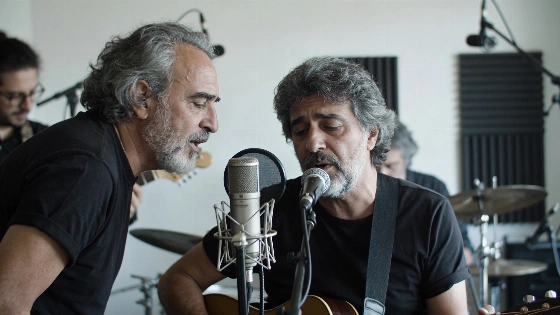
Estopa’s double album La Maketa, due on 20 November, revisits material from before the band’s commercial breakthrough. Its first disc contains 10 reworked compositions: seven from the original demo and three left off it. A second disc gathers original recordings, including home and studio versions. Pre-sales are scheduled to start on 18 October. Europa FM reported that the brothers presented two previously unreleased songs, Sentir diferente and Bicho raro. The latter is the project’s first single.
The recordings reach back to the years before Estopa’s commercial breakthrough. The original material comprises roughly 30 tracks recorded in 1996 and 1997, before the band signed with Sony and released its debut album. The Catalan newspaper Ara reported that the brothers performed those early songs with two guitars and vocals. David and José Muñoz helped in their parents’ bar and also worked at an automotive plant producing for SEAT. They spent summers in Zarza Capilla. The demo circulated outside commercial channels before social media became part of everyday life.
The brothers want the new versions to retain that unvarnished sound. After discussing the project for years, they recorded the songs live, playing together. Some lyrics had been softened when songs moved from the demo to Estopa’s 1999 debut and Destrangis in 2001. This time, they sought to preserve the original directness.
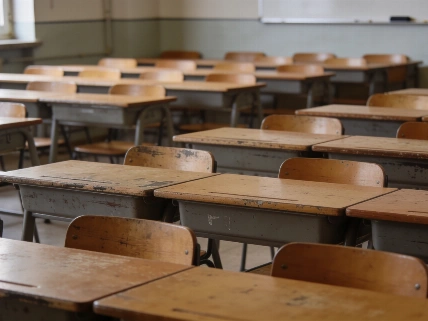
The album was presented at the Aula Magna of the University of Barcelona’s Faculty of Geography and History. David is studying history there after enrolling through the programme for students over 45. His classmates and lecturer describe a student who asks questions. He writes exams in Catalan and brings plenty of reading to class.
His return to university followed an early exit from education. David left school for factory work at 17, while his brother’s schoolmate Jordi Évole went to the Autonomous University of Barcelona at 18. David joined first-year classes in 2025/2026, where lecturer Manel García taught Pensar la historia. García says David is interested in Sumeria and Mesopotamia. His comments showed he had read widely.
García has argued that Estopa’s lyrics could be studied in contemporary history classes. They examine life in particular places and working-class experience.
The band considered recording on the roof of the Faculty of History, thinking of the Beatles’ famous rooftop performance. Solar panels and the weight of the recording equipment ruled that out, so Estopa recorded at Hotel Torre Melina instead. The sessions were filmed there, with drone footage capturing Barcelona’s outer districts.
Barcelona’s live-music calendar has also featured projects such as Mixtur, a festival that takes performances beyond conventional concert venues.
Estopa’s four stadium concerts are scheduled for 2027. The band plays Ciutat de València on 12 June, then Barcelona’s Estadi Olímpic Lluís Companys on 18 June. Seville’s La Cartuja is set for 26 June, followed by Madrid’s Riyadh Air Metropolitano on 9 July. Information from eldiario.es, tickets go on sale through the group’s official website on 17 November at 22:22.