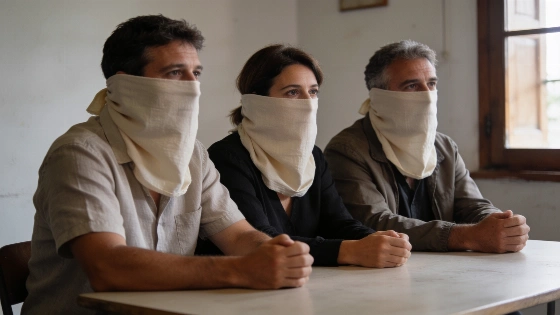
Fifteen years after ETA announced an end to its armed activity, the three masked messengers have taken different paths. David Pla works in Sortu; Iratxe Sorzabal is serving a 24-year-and-six-month sentence while Izaskun Lesaka remains out of public view.
David Pla now has a role in Sortu’s political school, while Iratxe Sorzabal is held under a closed prison regime in Zubieta, Guipúzcoa. The third person who appeared in ETA’s 2011 announcement, Izaskun Lesaka, was expelled to Spain in 2022 and has kept a low profile.
Their circumstances frame the anniversary of the video announcing an end to ETA’s armed activity. On 20 October 2011, David Pla, Iratxe Sorzabal and Izaskun Lesaka read the organisation’s declaration of a definitive cessation of armed activity. Counterterrorism officials in the Basque Country say they did not trust the announcement and kept working as before. According to sources cited in the account, they continued surveillance for almost a decade.
Investigations already under way stalled after the announcement, one agent said. Some suspects escaped prosecution even though investigators had gathered evidence and were closing in on them, the source added. The account also reports an agent’s concern that former members could still possess a gun; it gives no evidence to establish how many, if any, do.
ETA did not announce its full disbandment until 2018, seven years after the video. The 2011 declaration did not amount to an immediate surrender of weapons or dissolution. In April 2017, ETA helped French authorities locate eight caches containing weapons, explosives and ammunition. On 3 May 2018, at an event in Cambo-les-Bains in the French Basque Country, Josu Urrutikoetxea, known as «Ternera», and Soledad Iparraguirre, known as «Anboto», read a statement declaring the organisation dissolved and its structures eliminated. An independent review said around 300 ETA members were still in prison at the time.
The 2011 announcement came after years of pressure from security forces and rejection by civil society. A proposed dialogue between ETA and José Luis Rodríguez Zapatero’s government, initiated in 2006 through Jesús Eguiguren of the Partido Socialista de Euskadi, collapsed after the December bombing at Barajas airport. On 30 December 2006, about 200 kilos of explosives destroyed part of the T4 terminal, killing two Ecuadorian men, Carlos Alonso Palate and Diego Armando Estacio. In May 2010, the Audiencia Nacional sentenced Martín Sarasola, Igor Portu and Mikel San Sebastián to 1,040 years in prison each for the attack.
The Audiencia Nacional found that Martín Sarasola, Igor Portu and Mikel San Sebastián, members of the Elurra cell, had received the assignment from Garikoitz Aspiazu Rubina, known as «Txeroki». He was arrested in November 2008. The account says he later left Zubieta under Article 100.2 with authorisation from the Basque government. Francisco Javier López Peña, known as «Thierry», who had acted as ETA’s interlocutor with Eguiguren, was arrested in May 2008. Mikel Kabikoitz Carrera, known as «Ata», was arrested in May 2010 after taking over as leader.
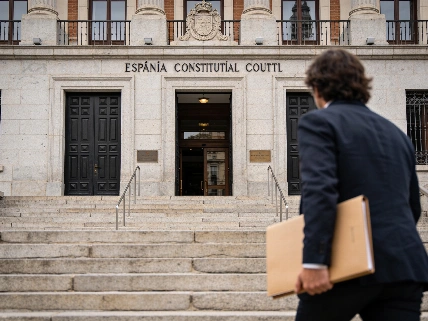
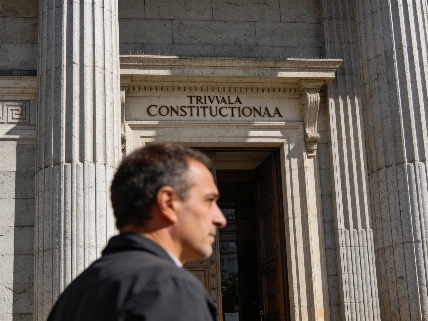
Political representation also changed. After the Supreme Court rejected Sortu’s registration, the Constitutional Court legalised the party in 2012. Sortu now directs EH Bildu from within; the coalition is led by Arnaldo Otegi and includes Alternatiba and Eusko Alkartasuna. Separately, RUSSPAIN has covered other Spanish policy issues, including PVC recycling plans.
The anniversary has also renewed competing accounts of the conflict. At the Ayete Conference, held three days before ETA’s announcement, participants discussed a political resolution. Gorka Elejabarrieta of EH Bildu later presented Ayete as a basis for resolving the conflict between Euskal Herria and the Spanish state. ETA killed 853 people and carried out 3,500 attacks; more than 7,000 people were victims, and 379 deaths remain unresolved, with ETA members not cooperating in those cases. An EFE review has also reported roughly ten criminal proceedings still open, while many crimes remain unresolved.
David Pla was first jailed in early 2000 and sentenced to six years for membership of an armed organisation and document forgery. After fleeing and rejoining ETA’s leadership, he was arrested in France with Sorzabal in 2015. French courts sentenced him to five years. He was released in 2019, arrested again in Spain in February 2020 under a European arrest warrant, then freed by the Audiencia Nacional with precautionary measures. He joined Sortu in 2022.
Sorzabal was convicted in France for her role in ETA’s leadership and transferred to Spanish authorities in September 2022. The Supreme Court upheld her 24-year-and-six-month sentence for two terrorist-damage offences linked to a double attack in Gijón on 2 November 1996. Lesaka, considered head of ETA’s logistical and military apparatus, was arrested in France in 2012 and sent to Spain in 2022 with no pending cases. The newspaper said it had found no further details about her since then.
The last killing attributed to ETA was the death of French police officer Jean-Serge Nérin on 16 March 2010. The organisation’s armed campaign lasted for more than five decades and involved killings, kidnappings, extortion and attacks. The distinction between ending armed activity and ending the organisation remained clear: ETA’s formal dissolution came in 2018, after the 2011 announcement.