Spain needs a stronger system to collect and recycle PVC windows as older installations reach the end of their service life. Asoven will make that case at Veteco in November.
VinylPlus recorded 416,889 tonnes of recycled window profiles in 2025, up from 396,677 tonnes a year earlier. That was a rise of about 5.1%, making window profiles the largest reported PVC recycling stream. Across all PVC waste, the 2025 total reached 765,972 tonnes, up 5.7% year on year. VinylPlus says 10.3 million tonnes of PVC have been recycled since 2000, avoiding an estimated 20.6 million tonnes of CO₂ emissions. Asoven PVC director Jaime Fernández says Spain needs to prepare for more PVC windows coming out of buildings after decades of use. That means building the logistics and treatment capacity to keep them out of landfill.
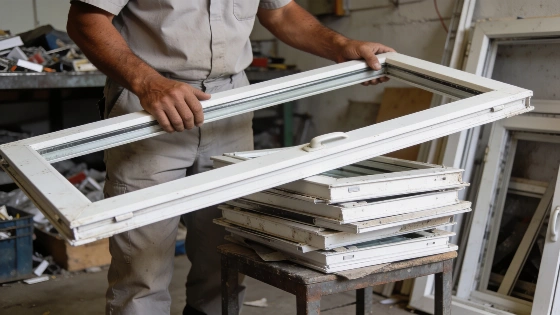
Most recycling in Spain still comes from manufacturing offcuts and surplus material returned to production. Post-consumer recycling is at an earlier stage. The country’s first generations of PVC windows are beginning to reach the end of their service life, and the volume removed is expected to rise as the market share built up over recent decades feeds through. EPPA estimates that around 650 million PVC windows are in Europe’s existing building stock. Their typical service life is about 50 years.
Fernández says the transition must be orderly and technically sound. Asoven is working on sustainability and circular-economy issues through regulatory and information channels, while preparing the sector for a larger flow of recovered windows. He argues that circularity starts with a product that lasts and can be repaired. It should also be reusable. PVC windows generally have a service life of 30 to 50 years. For recovered rigid PVC containing legacy lead, Commission Regulation (EU) 2023/923 sets concentration limits. It also requires marking and traceability.
Germany offers a recent example of a dedicated collection system for post-consumer PVC. Rewindo reported that the country recycled 141,595 tonnes of PVC in 2025, compared with about 131,000 tonnes in 2024. The volume of post-consumer material from old PVC windows and shutters rose from 44,109 to 58,358 tonnes. Related products are also included in the reported material stream. Rewindo said 70% of recycled material went into new PVC window profiles. Another 20% went into PVC pipes, while 10% was used in other profile applications.
Asoven will present its priorities at Veteco, held at Ifema Madrid from 10 to 13 November. The association has taken part since 2002 and will be at stand 9B02 in pavilion 9.
Its case is that PVC windows can meet changing construction needs. That includes energy performance and recycling, alongside digital tools and professional training.
Spain’s construction market gives the argument a mixed backdrop. Housing starts in 2025 reached their highest level since 2009, while renovation remained stable. Residential construction slowed in the first half of 2026, but Next Generation funds continued to support renovation. Spain’s Plan de Recuperación, Transformación y Resiliencia channels funding through public procurement and grants. It also provides business support through PERTE programmes. In Las Palmas de Gran Canaria, renovation work covering 819 homes in 23 buildings was fully contracted in December 2025 for €19.2 million. NextGenerationEU funds cover 70%. Fernández describes the PVC window market as growing, but exposed to geopolitical uncertainty and raw-material prices. Inflation and a shortage of skilled workers add to the pressure.
Current systems, Fernández says, deliver demanding thermal-transmittance and airtightness performance. Acoustic insulation has also improved. Advances in profiles and chambers have contributed to those gains. Seals and hardware have improved as well, alongside high-performance glazing. Manufacturers have widened the choice of colours and finishes. Asoven says recycled material can be incorporated while maintaining quality and strength. The products retain their durability.
European rules are likely to increase information requirements for manufacturers and specifiers. Fernández points to the EPBD review and updates to Spain’s Código Técnico de la Edificación. He also cites the future DB HSA. Global Warming Potential is being included gradually in building assessment. Fernández expects the future development of CE marking and the digital product passport to require more complete, traceable technical and environmental information. Asoven is involved in work on these changes at Spanish and European level.
Renovation remains another priority. Replacing old windows can improve insulation and airtightness. It can also improve comfort. Fernández says stable funding and efficient subsidies are needed to turn demand into a lasting market. He cites Madrid’s latest Plan Renove, developed through public-private cooperation, where more than 3,000 homes achieved estimated savings of about 3.8 GWh. Asoven is also seeking to improve how Certificados de Ahorro Energético (CAE) work for windows. It is working with AISLA on ‘Colabora y Rehabilita’. The association supports tax measures such as a reduced or green VAT rate for certain energy improvements. In Bilbao, the municipal Bilbao 2036 strategy includes urban rehabilitation and energy upgrades. A separate project covers 135 homes on Párroco Unceta street, with investment of more than €8.2 million.
Household energy offers are also competing for consumers, as Repsol's customer push shows. Asoven’s case centres on lowering building demand through better windows. Fernández says buyers increasingly weigh thermal and acoustic performance. They also consider energy savings and comfort. Awareness of recyclability and recycled content is growing.
Asoven has expanded its internal work, joining Eurowindoor and setting up committees and working groups. It has offered free artificial-intelligence courses to members. The association is also working on regulation and CAE access, alongside circularity and industrialised construction. Fernández identified the shortage of skilled workers and the lack of generational renewal as priorities for the sector.