The EU Court in Luxembourg will rule on key aspects of Spain’s amnesty law. At least 57 former officials and activists remain in legal limbo. The decision could clarify the path for Carles Puigdemont’s return.
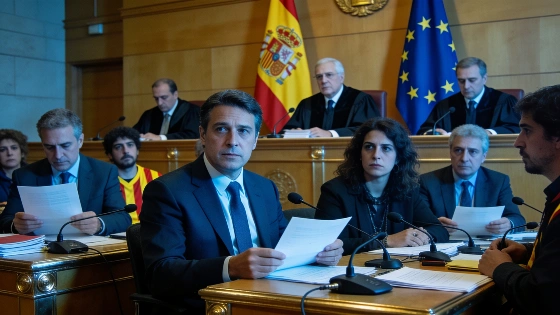
This Thursday, the European Union’s top court in Luxembourg will deliver a highly anticipated verdict on the legality of Spain’s amnesty law for Catalan independence leaders. The ruling, which addresses questions raised by Spanish courts about charges of misuse of public funds and terrorism, is expected to have a direct impact on the legal status of at least 57 former officials and activists who are still awaiting amnesty. The outcome could also influence the future of Carles Puigdemont, the most prominent figure among those affected, who has spent nearly a decade outside Spain.
The government led by Pedro Sánchez has made the amnesty law a central part of its strategy to resolve the political crisis in Catalonia. According to El País, the decision from the Tribunal de Justicia de la Unión Europea (TJUE) could either reinforce or undermine the legitimacy of the measure, which has faced strong resistance from conservative sectors within Spain’s judiciary. While the immediate legal situation of Carles Puigdemont may not change overnight, the court’s interpretation is expected to clarify whether he can safely return to Spain without facing prosecution.
Beyond the high-profile cases, the ruling will also affect dozens of other individuals linked to the Catalan independence movement. Many of them, including former senior officials and activists, remain in a state of uncertainty as they wait for the courts to decide if the amnesty applies to their cases. The TJUE’s decision will set a precedent for how Spanish courts handle charges related to public disorder and disobedience, which are still pending further clarification.
The stakes are high for both the Spanish government and the broader process of institutional normalization in Catalonia, which has been deeply affected by the events of the so-called procés. The amnesty law was designed to ease tensions and restore political stability, but its implementation has been anything but straightforward. As the country awaits the EU court’s verdict, the outcome could determine not only the fate of individual leaders but also the future direction of Spanish politics.
Political tensions around judicial decisions are not new in Spain. For example, the government recently defended David Sánchez, the Prime Minister’s brother, after a court in Badajoz banned him from public office—a case that also sparked debate over the role of the judiciary in political matters, as detailed in this related report.
The coming days will reveal whether the Luxembourg court’s stance aligns with the opinion of its advocate general, who last November signaled support for the Spanish amnesty law. If the court upholds the measure, it could mark a turning point in the long-running dispute over Catalonia’s status and the legal consequences for those involved in the independence push. For now, the legal uncertainty continues for dozens of individuals, and the political landscape remains tense as Spain awaits a definitive answer from Europe’s highest court.