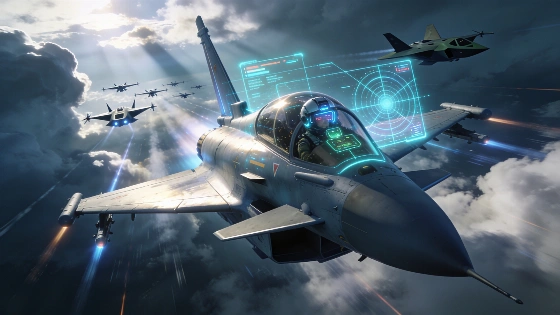
Spain is investing in a sweeping modernization of the Eurofighter fleet, introducing advanced sensors, electronic warfare systems and new digital cockpits. The upgrades aim to keep the fighter at the forefront of European air power and enable seamless operations with future drones and sixth-generation jets.
Spain has launched an ambitious plan to future-proof its Eurofighter fleet, combining new aircraft orders with a comprehensive upgrade strategy designed to keep the jet operationally relevant for decades. The initiative, anchored by the Halcón program, will see the Spanish Air and Space Force expand its Eurofighter inventory to 115 units and equip them with cutting-edge technologies for modern warfare.
The Halcón program is split into two phases: Halcón I, which covers 20 new fighters, and Halcón II, adding another 25—21 single-seat and four twin-seat aircraft scheduled for delivery between 2030 and 2035. These new jets will gradually replace part of Spain’s aging F-18 fleet and come equipped with E-Scan electronically scanned array radar, advanced avionics, upgraded sensors and improved connectivity. According to Talent24h, the Ministry of Defence has pressed industry partners to meet strict performance and delivery targets for the first Halcón I aircraft.
P4E: Enhanced Combat Capabilities
The next leap in Eurofighter evolution is the Phase 4 Enhancement (P4E) package. This upgrade will introduce new weapon integration options and the Striker II digital helmet, which projects mission data directly onto the pilot’s visor and features a color display with integrated night vision. P4E also brings automated sensor management, allowing the AESA radar to handle multiple tasks simultaneously and reducing pilot workload.
Additional improvements include a redesigned cockpit interface, upgraded radiofrequency communications, and enhancements to the DASS defensive suite, which detects threats and manages countermeasures. These upgrades can be installed during production of new jets or retrofitted to existing aircraft through modernization work.
New Aerodynamic Kit for Agility and Payload
Alongside P4E, a new aerodynamic kit will modify key sections of the wings and their junction with the fuselage. These changes will increase the jet’s angle of attack, boost maneuverability, and expand payload capacity for sensors, weapons and external equipment. The kit also enables asymmetric loadouts between the wings, offering greater operational flexibility. Germany has already committed to this upgrade, and Spain is considering its adoption for both Halcón and Tranche 3 Eurofighters.
LTE: Preparing for the Next Generation
The most transformative step will come with the Long Term Evolution (LTE) architecture. LTE introduces an open avionics system that separates flight-critical controls from mission systems, making it easier to integrate new technologies as they emerge. Planned upgrades include new mission and flight control computers, advanced communications, improved weapons management, and a redesigned cockpit—potentially featuring a larger touchscreen for more intuitive operation.
Crucially, LTE is designed to enable the Eurofighter to operate seamlessly alongside future sixth-generation fighters and unmanned collaborative combat aircraft. The first phase of LTE development is already underway, with service entry targeted for the second half of the 2030s, pending agreements among Spain, Germany, Italy and the United Kingdom.
With these upgrades, the Eurofighter is set to remain the backbone of Spain’s air defense and a key player in European military aviation well into the middle of the century. The modernization reflects a broader trend among NATO allies to extend the life and capabilities of existing platforms while preparing for the integration of next-generation systems and autonomous assets.