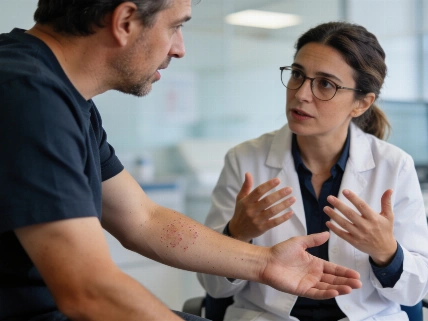
Cancer survival has risen from 35% of patients to close to 70%, Josep Tabernero said at the forum. The director of the Vall d’Hebron Instituto de Oncología called this the best position yet, saying in Spanish, “Nunca hemos estado mejor que ahora” (“We have never been better than now”, translated from Spanish). Tabernero attributed the gains to advances in understanding tumour biology and the human genome, along with more targeted medicines and precise diagnostic tools. He also noted that around 20 million new cancer cases are diagnosed worldwide each year. Ageing and population growth are expected to increase that number.
His remarks came on the second and final day of World in Progress (WIP), organised by the PRISA Group in Barcelona. The November 2026 forum brought together discussions of geopolitical disorder and economic uncertainty, alongside artificial intelligence and energy. Public policy was also on the agenda. Its announced participants included European Investment Bank president Nadia Calviño, along with central-bank officials José Luis Escrivá and Emmanuel Moulin. Telefónica España executive chairman Borja Ochoa and Indra chairman Ángel Simón were also listed. The agenda covered energy, though the supplied account gave no further details on that subject.
Artificial intelligence drew a warning from Manuel Muñiz, rector of IE University. He said in Spanish, “Vamos a tener modelos que van a superar de manera sistemática las capacidades humanas” (“We are going to have models that will systematically surpass human capabilities”, translated from Spanish). Muñiz also argued at the forum that Europe remains a technology taker and should aspire to develop its own AI model. He warned that reliance on systems developed elsewhere could create strategic dependence while regulatory frameworks struggle to keep pace. Europe’s AI capacity also depends on chips and the computing infrastructure behind data centres. Euronews reported that the EU lacked a frontier model with the prominence of OpenAI and Anthropic. China’s DeepSeek was another point of comparison. The outlet also reported that China supplies as much as 90% of Europe’s rare-earth elements. Proposals under a European Technological Sovereignty Package include expanding semiconductor production and data-centre capacity. The package also proposes support for sustainable AI and open-source software. Another proposal would connect data centres with the energy grid. The forum’s discussion of reliance on external AI models also connects with earlier Barcelona coverage of digital autonomy.
At WIP, AI came up as an economic and geopolitical issue, as well as a cognitive one and a tool for medicine. Tabernero identified potential uses in screening and diagnosis. He also cited designing targeted drugs and using AI in surgery. Radiotherapy and personalised patient follow-up were among the other applications he named. Researchers were already using AI to design medicines aimed at vulnerabilities in malignant cells, he said. Calviño, president of the European Investment Bank, said the bank would finance AI intended to serve the common good and promote progress and inclusion. Her participation placed AI within a wider discussion of productivity and industry, as well as telecommunications and health.
Calviño argued that multilateralism remains effective. “El multilateralismo está vivo y funciona” (“Multilateralism is alive and works”, translated from Spanish), she said. She also acknowledged that the foundations of Europe’s success are under attack. As a result, she said, European values matter more than ever.
On Colombia, former president Juan Manuel Santos defended the agreement with the FARC against criticism from the country’s current government. “En un proceso de paz se necesita alguien dispuesto a poner la paz por encima del poder” (“In a peace process you need someone willing to put peace above power”, translated from Spanish), he said.
Arancha González Laya, WIP president, described the US midterm elections as a verdict on the “método Trump” (“Trump method”). “No votamos en estas elecciones, pero nos jugamos mucho” (“We do not vote in these elections, but we have a lot at stake”, translated from Spanish), she said.