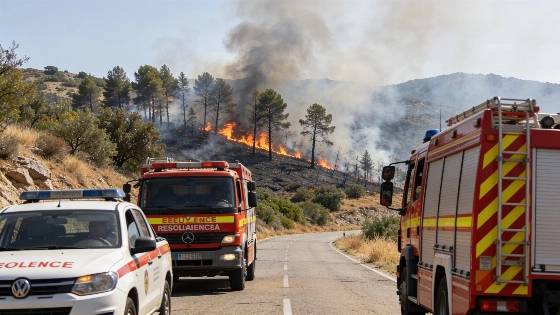
The wildfire that began near La Mierla in Guadalajara on 16 July 2026 prompted the village’s evacuation and protective confinement measures in nearby areas. In the initial emergency, the regional government activated the Es-Alert system, telling residents to leave calmly with impressive documents and medication. Reportedly started by a harvester, the blaze also led to restrictions around the Beleña reservoir, the Peñamira hermitage and Muriel.
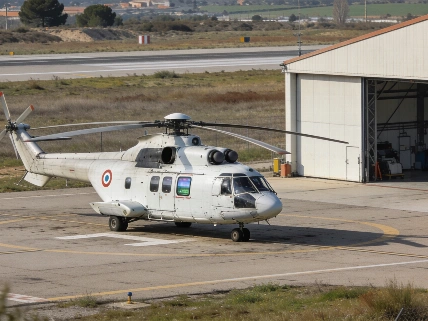
As the situation escalated, Castilla-La Mancha formally requested support from the Unidad Militar de Emergencias (UME). By early Thursday afternoon, five aerial units and 18 ground teams, with 98 personnel in total, had been deployed. Authorities raised the operational status to level two and closed basic roads, including the CM-1004 and GU-188, to protect the public and give emergency teams room to work.
Mercedes Gómez, the regional minister for Sustainable Development, told the regional parliament that the evacuation message had gone to La Mierla’s approximately 40 residents, directing them towards Puebla de Beleña via the GU-189. She described the fire’s rapid advance: it was spreading at around 30 metres per minute and had reached the treetops, putting nearby communities including Retiendas and Tamajón at greater risk.
Plan Infocam, Castilla-La Mancha’s wildfire prevention and response service, urged the public to follow instructions from emergency and security personnel. At the time, fire-propagation risk was classified as extreme across much of the region, including Toledo, Ciudad Real, Guadalajara, Cuenca and Albacete, and very high elsewhere. A fixed lookout first detected the fire at 13:55. It was burning forested land.
The emergency soon stretched far beyond the initial evacuation of La Mierla. Later reporting by Liberal de Castilla said around 1,500 people were evacuated from 34 localities, while residents in another 14 populations were confined. The fire ultimately burned 34,447 hectares, most within the Sierra Norte de Guadalajara Natural Park, making it the largest wildfire recorded in Castilla-La Mancha. Authorities declared it extinguished on 4 September, after 51 days.
Muriel, with around ten inhabitants, was among the communities initially placed under confinement. High temperatures and dry vegetation, along with strong winds, helped the fire spread. The incident also echoed other Spanish wildfire emergencies, including the Los Gallardos fire in Almería, where the response and allocation of resources became a subject of public debate, as discussed in coverage of the Los Gallardos fire response.
Once the flames were out, attention shifted from emergency response to recovery. EFE Verde reported that ash still covered the field nearly two months later, as firefighters began documenting the damage. Firefighters, residents and local associations also organized a 75-kilometre route through the Sierra Norte to call for restoration and a more professional approach to wildfire prevention and suppression.
The regional government’s recovery plan included forestry and hydrological works to limit runoff and keep ash out of streams and reservoirs. Measures reported by Nueva Alcarria included fajinas and albarradas, structures designed to hold eroded material, reduce soil loss and stabilize burned slopes. October reporting also described ozone peaks and displaced wildlife, including wolf cubs moving into areas where livestock are kept. The damage reached beyond the burned forest into surrounding rural communities.
The fire’s aftermath has put ecological restoration and land management at the center of regional concerns. The scale of the burn, the evacuation of thousands of people and the need to protect waterways show how a local emergency grew into a major challenge for communities and ecosystems across the Sierra Norte.