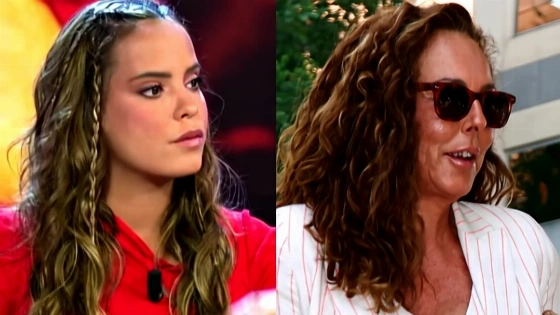
A new Movistar Plus documentary about Rocío Jurado, produced by her daughter, has reignited family tensions. Discovered memoirs contradict previous accounts of her marriage. Key relatives refuse to participate.
The release of a new documentary on Movistar Plus about Rocío Jurado, produced by her daughter Rocío Carrasco, has triggered a fresh and public split within the Jurado-Mohedano family. The film, which marks two decades since the singer’s death, is built around handwritten notes said to be memoirs by Jurado herself—documents that Carrasco claims to have found only recently, despite having received them from her mother after Pedro Carrasco’s death in 2001.
These writings, according to Carrasco, offer a version of events that diverges sharply from the family’s established narrative, especially regarding Jurado’s marriage to Pedro Carrasco. The documentary asserts that Jurado took the initiative in their 1989 separation and that, while their relationship remained respectful, she never considered reconciliation, even if Pedro Carrasco may have hoped for it. This portrayal stands in contrast to previous public accounts and has fueled internal disputes.
Key family members, including Ortega Cano and Amador Mohedano, declined to participate in the project or provide their perspectives. Amador Mohedano has publicly denied the existence of any memoirs written by his sister, while Gloria Camila Ortega Mohedano has demanded access to the documents and voiced her disagreement with Carrasco’s interpretation. Raquel Mosquera, Ortega Cano’s partner, has also criticized the documentary’s narrative.
The documentary further explores the circumstances of Jurado’s separation from Pedro Carrasco, highlighting that no evidence of third parties has been found, though Amador Mohedano describes Jurado as notably flirtatious. The film’s revelations have not only reopened old wounds but also intensified the family’s internal divisions, with some relatives questioning both the authenticity and the handling of the supposed memoirs.
Rocío Carrasco’s return to the public eye with this project follows her earlier series, "Contar la verdad para seguir viva," which also sparked widespread debate and polarized reactions. The current documentary delves into the personal and professional life of one of Spain’s most celebrated musical icons, offering a perspective that challenges long-held family and public beliefs. The situation echoes other high-profile disputes in Spanish celebrity circles, such as the recent public fallout between Paula Badosa and Stefanos Tsitsipas, which was covered in detail in a previous report on tensions following their breakup.
Rocío Jurado, often referred to as "La más grande," remains a central figure in Spanish cultural memory. Her legacy continues to provoke strong reactions, not only due to her artistic achievements but also because of the unresolved family conflicts that surface with each new revelation. The ongoing dispute over her personal writings and the narrative of her marriage underscores the enduring impact of her life and career on both her family and the broader Spanish public.