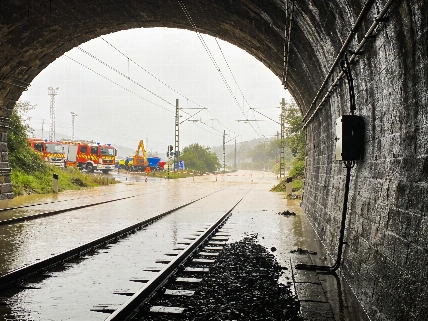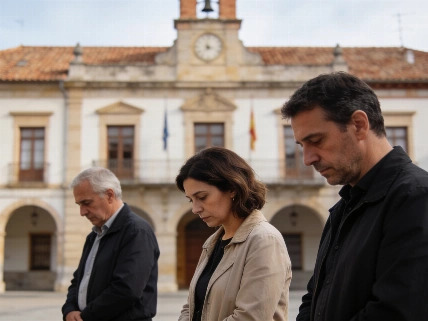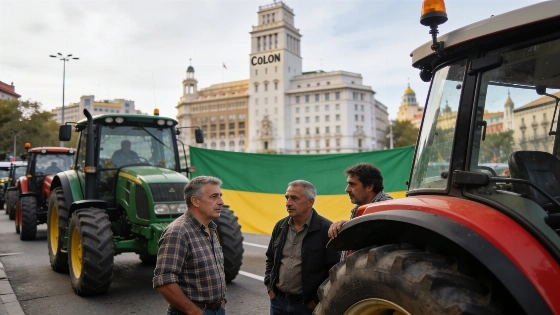
At 11am, tractors began entering Plaza de Colón as farmers gathered beneath green and yellow association flags. The planned nationwide mobilisation involved about 500 tractors in five columns, travelling toward Madrid from Torrejón de la Calzada, Guadalajara, El Espinar, Buitrago del Lozoya and Arganda del Rey. Organisers called off the march after news of the collision involving a Renfe train and an Iryo train in Toledo province, where reports said at least 30 people had died. The gathering ended with brief speeches and five minutes of silence in tribute to the victims.
The Ministry of Agriculture was the intended destination. The organisations had planned to present their demands there, but the tractors and farmers never reached it. Asaja, COAG and Unión de Uniones said they postponed the protest out of solidarity and respect for the victims. The groups stressed that their campaign and demands remained active. The march had been convened under the slogan “Por un campo con futuro” (“For a countryside with a future”).
COAG and Asaja called the protest, alongside Unión de Uniones. Luis Góngora, COAG’s secretary general, said the tragedy had left Spain in mourning while problems in the farming sector remained. UPA, the only major agricultural association not to join, said it had postponed its mobilisations because of the early election. The railway accident also disrupted rail services between Andalucía and Madrid. El Correo de Andalucía reported that around 500 Andalusian farmers were travelling on different trains when rail traffic was interrupted.
Farmers planned to demand fair prices, lower production costs, less bureaucracy and a strong Common Agricultural Policy (PAC). Organisers cited rising production costs, inadequate farm profitability and threats to the future of agriculture and livestock farming. The policy is central to support for the sector. Its proposed reform is being discussed in connection with the EU budget period from 2028 to 2034. The Spanish government welcomed a partial agreement by the Council of the EU, while the sector rejected it. At the time, it still required negotiation in the European Parliament.
Fuel costs were a prominent complaint. Baldomero Bellido, president of Asaja Málaga, said producing cereals cost at least €700 per hectare, while a kilo sold for around 25 cents. Carmelo Ramírez, who represents Madrid livestock farmers, said diesel prices had risen from €1.20 a litre the previous year to €1.70 at the time of the protest. He said the increase was causing losses in his sector.
Paperwork was another burden. Ramírez estimated that completing the forms for a €1,000 subsidy could take him up to two days. He said none of his three children wanted to work in farming or livestock, citing conditions that discourage young people from entering the sector.
The Madrid gathering was an agricultural protest, unlike the Maó rally protest, where police stopped around 400 activists near a Vox event. Earlier farm mobilisations had also opposed proposed European Commission cuts to the future PAC and the EU-Mercosur agreement. Protests reached up to 30 locations across Spain.