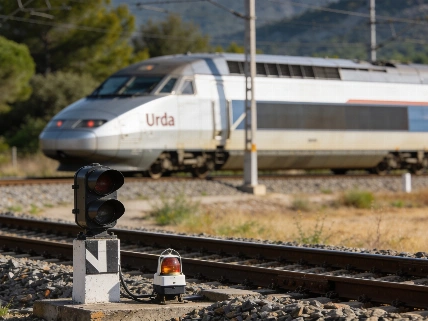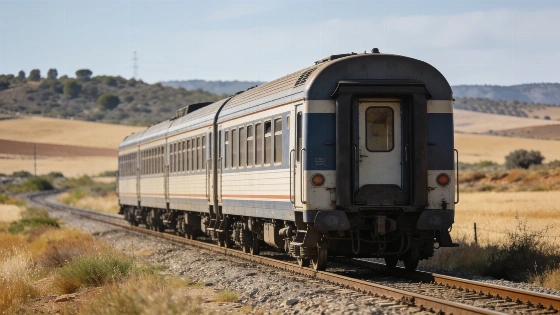
The collision occurred at about 08:53 on 28 October on the Madrid-Córdoba high-speed line between Urda and Los Yébenes. The Iryo was stopped on the line when Renfe AVE service 02080, travelling from Madrid Atocha to Sevilla Santa Justa, hit it from behind. Railway Gazette reported that 397 people were aboard the AVE and 147 on Iryo service 6076, a combined 544 passengers. Two Iryo carriages derailed and plunged down an embankment. Báñez was among those killed in the crash. The provisional death toll reached at least 68, with many injured.
She was travelling in the train’s last carriage with a business delegation bound for Seville. The group was due to attend the Confederation of Andalusian Entrepreneurs’ Day of the Company. An earlier crash report covered the wider disaster. The death toll rose as the emergency response continued: EFE initially reported at least 64 fatalities, including 40 people aboard the Iryo and 24 on the AVE, while crews searched the wreckage.
News of her death came after hours of uncertainty. She was first reported missing, and Seville’s mayor said her whereabouts could not be confirmed. Her husband, lawyer Jaime Alonso, travelled to Toledo; sources in the PP later confirmed her death. CEOE also confirmed that Báñez had been travelling on one of the trains involved.
Báñez was 59. Born in San Juan del Puerto in Huelva, she returned to the town whenever she could. Her father, Eduardo, founded Carnes Báñez S.A., where she began her career as a strategy director. In 2025, she collected a posthumous award for him, recognising his family’s 38 years of providing livestock for the town’s annual capeas.
A law graduate, she also studied economics and business at Universidad Pontificia de Comillas (ICADE). She later completed a postgraduate business qualification at Harvard and a public leadership programme at IESE. She became minister of Employment and Social Security in December 2011 and designed the 2012 labour reform. From July 2020, she led the Fundación CEOE.
She and Alonso had two children. In 2017, Báñez spoke about the difficulty of combining work and family life. She argued that motherhood affected women’s careers and pay, contributing to the wage gap. A practising Catholic, she also credited the Virgen del Rocío with helping Spain’s economic recovery.
Railway Gazette reported that a formal investigation was launched into the collision, the second fatal accident on the Madrid-Andalusia high-speed line in 2026. Spain’s transport minister, Óscar Puente, confirmed that the AVE hit the Iryo from behind.