Alberto Núñez Feijóo heads to Ceuta with top European Popular Party figures. The move aims to push the EU to address the migration crisis at Spain’s border. A special debate in the European Parliament is now on the agenda.
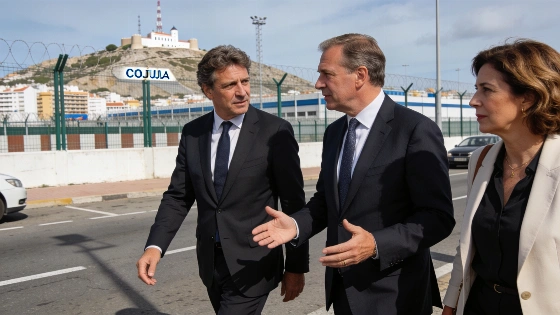
Alberto Núñez Feijóo has stepped up his response to Ceuta’s migration crisis by traveling to the city with Manfred Weber and Dolors Montserrat, the top leaders of the European Popular Party. This visit is meant to put direct pressure on the European Union to treat Ceuta’s border as a European concern, not just a Spanish one.
The Partido Popular wants to move the debate from Madrid to Brussels. By bringing the president and secretary general of the European Popular Party to Ceuta, Feijóo is calling for the EU to acknowledge the scale of the problem and take responsibility for the enclave’s security. Borja Sémper, the party’s spokesperson, says that defending Ceuta means protecting the EU’s external border.
On July 30, 2026, approximately 80,000 people crossed from Morocco into Ceuta in what European Parliament sources describe as an unprecedented mass influx, marking the start of the current crisis.
The Spanish government is under fire from the opposition, with Feijóo accusing it of “irresponsible” and “negligent” handling of the situation. The push to involve Brussels is not new. Just a week earlier, Spain’s foreign minister, José Manuel Albares, was in Brussels seeking support for proposals from Pedro Sánchez, including a permanent seat for Ceuta and Melilla in the Committee of the Regions and possible entry into the EU Customs Union.
Feijóo’s schedule this week includes several high-level meetings. On Thursday, he will meet in Madrid with Magnus Brunner, the European Commissioner for Immigration. At the same time, the Partido Popular has secured a dedicated debate on Ceuta in the European Parliament, aiming to keep the issue in the spotlight.
For Ceuta, the impact is immediate. The city has faced repeated waves of irregular migration, straining local infrastructure and raising questions about how the border is managed. The Spanish government’s recent diplomatic efforts in Brussels show that national solutions are falling short. By bringing European leaders to Ceuta, the Partido Popular is challenging Madrid’s approach and trying to make the crisis an international issue.
According to official data, more than 5,300 migrants have voluntarily returned to Morocco from Ceuta since August 10, while local authorities estimate that around 13,000 migrants remain in the city. The Spanish government and local officials continue to disagree on the exact number of people still present, highlighting the ongoing complexity of the situation.
Feijóo is betting that EU involvement will bring resources and political weight to the situation. Both the government and the opposition are now trying to “europeanize” the Ceuta crisis, showing the limits of Spain’s internal policy and the growing expectation that Brussels must act. The dispute over Ceuta is no longer just a local issue—it is a test of how the EU responds when national governments can’t manage alone.