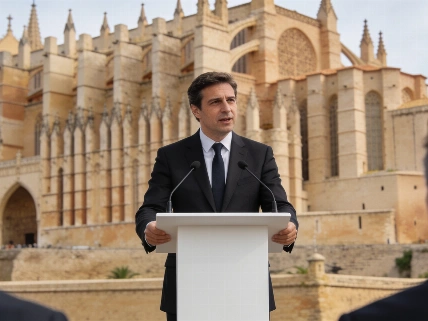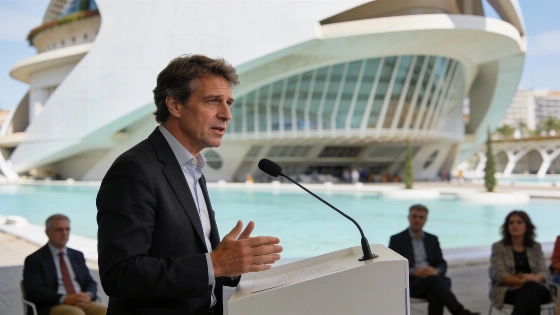
At a Valencia campaign event, Alberto Núñez Feijóo promised a smaller government and an audit of public spending. He also pledged to exempt people earning the minimum wage from IRPF if he wins the election.
About 1,500 people attended the campaign event at the Palau de Les Arts de València on 23 October 2026, where Alberto Núñez Feijóo outlined his proposals for the 29 November general election.
If elected, he said he would reduce the size of the central government, with fewer ministries and a leaner political leadership, including fewer senior officials and political advisers. He also pledged that his first Council of Ministers would approve a comprehensive audit of public spending over the previous eight years.
The audit, he said, would establish how much had been stolen and how much had been wasted. He presented those claims as questions for an audit to examine, not as findings already established. Feijóo also cited an additional €210 billion in public spending since 2018 and €540 billion in additional debt, which he described as a 44% increase.
Feijóo promised that people earning the minimum interprofessional wage, or SMI, would be exempt from personal income tax, or IRPF, by law, with the exemption rising automatically whenever the SMI increased. The 2026 discussion concerns an annual SMI reference of approximately €17,094 and around 2.5 million workers. In February, the Spanish government approved measures for the fourth consecutive year intended to leave SMI earners with no IRPF to pay in practice: a labour-income deduction introduced from 1 January 2026 offsets tax liability up to that earnings level. This arrangement is distinct from a blanket statutory exemption. Workers with more than one payer may still have to file a tax return, while single-payer workers can file voluntarily to recover amounts withheld from their wages.
Feijóo framed the tax pledge as part of a wider income and purchasing-power platform. Its commitments include a general IRPF reduction in 2027 and higher minimum and average wages. These remain campaign commitments conditional on the Partido Popular winning the election; the account does not describe them as measures already in force.
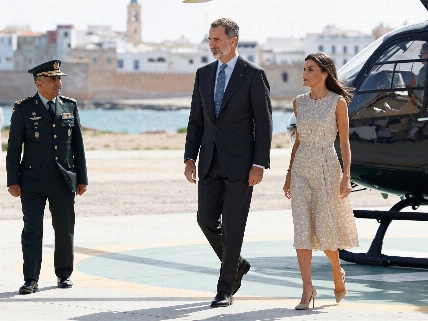
RUSSPAIN has separately covered Spanish institutional affairs, including the Ceuta royal-visit plan.