Alberto Núñez Feijóo has rejected the housing decree the Government plans to approve. He wants more construction, tax cuts and Yolanda Díaz's resignation as protests grow after the eviction of 87-year-old Maricarmen Abascal.
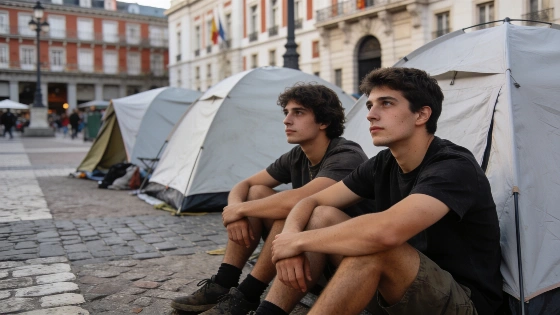
Hundreds of people remain camped in Madrid's Puerta del Sol after a weekend protest over access to housing. The camp followed the eviction of 87-year-old Maricarmen Abascal. The Government plans to approve its housing decree in the Council of Ministers this Tuesday.
Alberto Núñez Feijóo says the measure cannot repair eight years of failed policy. He describes it as an attempt to extend what he calls a sterile legislature. The PP leader also says the Government has not explained what the decree will change for people who cannot buy or rent a home.
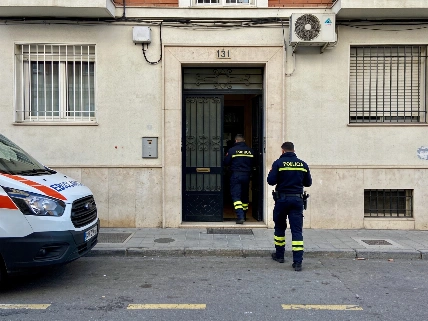
The encampment was triggered by the eviction of 87-year-old Maricarmen Abascal, turning an individual case into a wider protest over housing insecurity in Spain.
Feijóo says the PP, the country's first party, was not consulted for even a minute. He has not said whether the popular party will support the measure.
Housing was the 16th concern among Spaniards eight years ago, according to Feijóo. He says it is now the number one problem. He blames the coalition Government for that change and argues that prices have risen more than ever during Pedro Sánchez's time in office.
For Feijóo, the record is failure.
The PP leader also attacked Yolanda Díaz, the Deputy Prime Minister and Labour Minister. Díaz called for mobilisation over the housing crisis. Feijóo said she should resign immediately. He argued that a government minister should not call demonstrations against the executive in a democratic country.
Estimates of the Saturday march differ sharply: a government delegation cited 25,000 participants, while organisers claimed as many as 300,000. Protesters are also demanding stronger tenant protection, rent controls or freezes, and an end to evictions without an alternative home.
Evictions form another part of Feijóo's attack. He referred to the 25,000 evictions that take place each year in Spain and recalled cases in Madrid and Catalonia. He also mentioned a woman with two children who was evicted and later died by suicide. Feijóo said nobody camped or asked about her case.
The dispute is unfolding beside a visible protest in central Madrid. Hundreds of people have slept in tents at Puerta del Sol since the weekend. Reuters, AFP, NPR and AP describe the camp as part of a wider mobilisation over Spain's worsening housing affordability crisis, not a protest limited to one eviction.
Organisers say they will remain in Puerta del Sol at least until Tuesday's cabinet meeting. They call their demand a "Maricarmen decree". Euronews reports that the Sánchez government intends to approve the housing decree on Tuesday and has been seeking parliamentary backing. Public reports give only limited detail about the package.
Feijóo's alternative focuses on supply. He says Spain must build one million homes and that private initiative is needed to reach that figure. He argues that construction would create thousands of jobs. More homes, in his view, would bring prices down. Intervention would instead mean higher prices, less supply and more problems for demand. Democrata reports that Feijóo has called the Government's decree ineffective and presented higher housing supply as the PP's alternative.
His programme also includes tax measures for young people. It proposes lower income tax during the first years of employment. It would cut VAT and reduce Property Transfer Tax from 10% to 4%. The plan also includes 100% guarantees for the value of a home, easier access to mortgages, greater legal certainty for landlords and income tax deductions for tenants.
At the CECOT meeting in Terrasa, Feijóo presented ten economic commitments to renew the social contract. He linked them to higher disposable income for families, easier access to housing and greater productivity across the Spanish economy.
The Government is preparing a decree. The PP questions its content and its chances of producing results.
The protests show the pressure around access to housing, but they do not settle which policy can reduce prices. Feijóo offers a target of one million homes and a set of tax measures. He rejects stronger intervention in the market. The Government's planned measure remains a proposal, not an accomplished solution.
That distinction matters for young people who share homes or live with their parents. The dispute is about more than one decree. It is also about who is responsible for the housing crisis and which remedy should replace the current course. Feijóo's position is clear: without a substantial increase in supply, the Government will not solve the problem. Without an agreement with the PP, the decree will begin its parliamentary life under immediate political pressure.