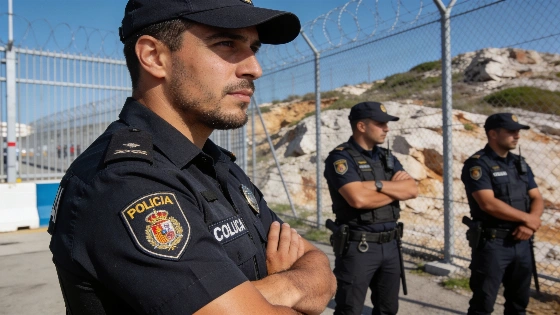
The scale of the entry into Ceuta prompted King Felipe VI to call for urgent steps to prevent a repeat, after more than 50,000 people crossed from Morocco in just two days. In a statement released by the Royal Household, the monarch described his reaction as one of “great concern and indignation” over events that led to tragic loss of life and heightened security fears in the Spanish enclave. Subsequent reporting on the diplomatic dispute put the number of people who crossed at more than 70,000 within 48 hours, underscoring the scale of the crisis.
Throughout the crisis, Felipe VI maintained direct contact with Prime Minister Pedro Sánchez, the leaders of Ceuta and Melilla, and opposition head Alberto Núñez Feijóo. The official message said he offered each words of encouragement and resolve, stressing the need for a clear, united response from all levels of government. In a later address, the King framed the episode as both a national security challenge and a breach of an EU external frontier, calling for Europe to be “more effective and more united in protecting the Union’s external border.” He also reaffirmed Spain’s position on the two cities, saying its sovereignty and territorial integrity were “not negotiable.”
The situation triggered diplomatic tension within the European Union. Prime Minister Sánchez criticized several EU governments for what he called “prejudice, false news, ignorance or political interest” in their handling of the Ceuta crisis. In a letter to EU leaders, Sánchez condemned the reactions of some member states, without naming them, and called for an urgent meeting of interior ministers. The move came after Italy suspended Schengen cooperation with Spain, while Finland and Denmark raised the possibility of temporarily halting free movement with Madrid. For more on how Italy's decision is affecting travel and border controls, see this report on Italy's new random checks on Spanish arrivals.
Spanish authorities estimate that more than 48,000 of those who entered Ceuta have already returned to Morocco. The Government of Spain later reported that more than 12,700 people had returned between 10 August and 20 October, while most adults still in the city were housed in facilities provided by the central government. Madrid said its declaration of a “Situation of National Security Interest” established stronger coordination for border management, accommodation, returns and wider security operations. In a 3 September address to Congress, Sánchez defended the government’s approach while acknowledging it could have handled the crisis better. He said authorities faced a difficult choice between allowing people to cross temporarily and using force, which he argued might have caused more deaths. He also cited the creation of 7,000 places for migrants and more than 12,000 voluntary returns.
Cooperation with Morocco remained basic to Spain’s efforts to prevent further crossings. Sánchez said that “you need cooperation, in this case from Morocco, to stop that massive influx on its side.” The crisis also prompted a three-month dispute with Italy over Schengen arrangements. On 22 October, Italian Interior Minister Matteo Piantedosi and Spanish Interior Minister Fernando Grande-Marlaska agreed not to extend the temporary suspension, with the controls scheduled to end on 23 October. The two governments said the decision followed a careful assessment and would include more information-sharing to protect the common Schengen area.
Ceuta, along with Melilla, represents one of the European Union’s land borders with Africa, making it a recurring flashpoint for migration and diplomatic disputes. Felipe VI said irregular entrants should generally return to their places of origin through legally established channels, while people who remain in Spain must be treated with dignity and receive the protections guaranteed by law. The crisis has renewed debate over border management, migration policy and the balance between humanitarian obligations and security. As the government works to restore stability, the focus remains on preventing further tragedies and protecting border communities.