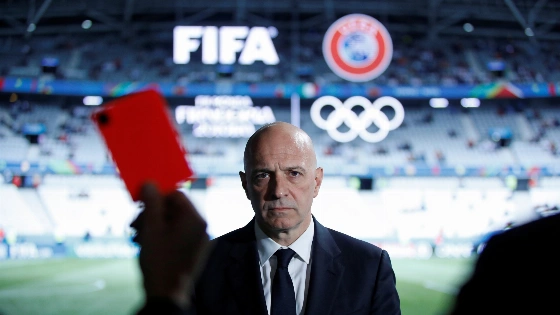
Gianni Infantino, FIFA president and a member of the International Olympic Committee since 2020, faces an ethics complaint filed by UK-based human rights organization FairSquare. The complaint alleges breaches of the IOC’s political-neutrality rules and follows controversy over United States forward Folarin Balogun’s suspension during the 2026 FIFA World Cup.
Balogun was sent off during the United States’ 2-0 victory over Bosnia and Herzegovina, a dismissal that ordinarily brought an automatic one-match suspension. FIFA did not overturn the red card. It suspended implementation of the ban for a one-year probationary period, making Balogun eligible for the round-of-16 match against Belgium. The United States lost 4-1 and were eliminated.
FIFA’s action was reportedly based on Article 27 of the FIFA Disciplinary Code, which permits the implementation of a disciplinary sanction to be suspended under specified conditions. The organization said the decision was made by FIFA’s independent Disciplinary Committee. Infantino denied personally intervening. The unusual use of the provision during an active World Cup, with eligibility consequences for a knockout match, raised questions about consistent application of disciplinary rules. Belgium reportedly challenged Balogun’s eligibility, and FIFA was reported to be considering changes to the rules behind the suspension.
Reporting also linked the decision to a July 1 telephone conversation between United States President Donald Trump and Infantino, before FIFA suspended the ban. Unnamed sources cited in later coverage alleged that Trump asked Infantino to review the matter. One was quoted as saying, “He told President Trump that he would take care of it. One call and it was done.” FIFA disputed the suggestion that outside pressure changed its position. A spokesperson said, “Our position has not changed regardless of what unnamed sources claim.”
FairSquare’s complaint alleges that Infantino breached the IOC’s neutrality standards through his conduct and public statements. The allegations are separate from FIFA’s disciplinary decision and the subsequent scrutiny of that decision by European football officials. In 2025, FairSquare also filed a complaint against Infantino over alleged neutrality breaches.
The IOC’s ethics commission examines potential breaches of the Olympic Charter by IOC members. Kirsty Coventry, identified in the complaint’s context as a senior IOC official, had clarified that Infantino was not exempt from investigation and that a formal submission was required to trigger proceedings. The filing has renewed attention to Infantino’s obligations as both FIFA president and an IOC member.
UEFA separately stepped up its scrutiny of FIFA by sending it a letter with 42 questions. The inquiry sought the written reasons for suspending Balogun’s ban and clarification about Trump’s role. It also raised governance issues, including the proposed FIFA Peace Prize and FIFA Forward Enterprise, as well as the World Cup final’s halftime show and hydration-break rules. UEFA General Secretary Theodore Theodoridis requested a substantive written response and supporting documentation by November 2, 2026. FIFA said it intended to respond but would not breach confidentiality obligations.
The episode has intensified debate over the separation of football administration from political influence and the transparency of disciplinary decisions. It comes amid other high-profile disputes involving sports officials and political pressure, including the diplomatic fallout between Spain and France before a World Cup semifinal, covered in a previous report on political tensions in football. The outcome of FairSquare’s complaint could bring further scrutiny of ties between international sports bodies and political leaders.