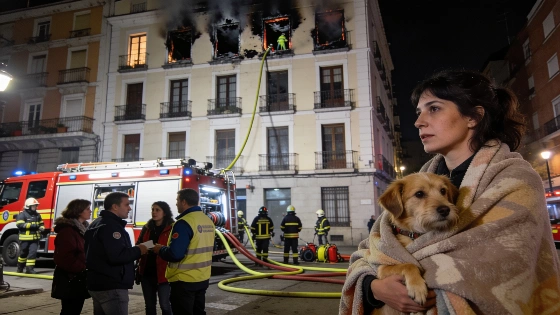
Fifteen residents and a dog spent the night away from home after a fire broke out shortly before midnight on 3 August 2026 on the seventh floor of a residential building in Madrid’s Chamberí district. The fire, at numbers 52 and 54 on Calle García Paredes, forced emergency services to evacuate both buildings as flames spread through the upper level. The wooden roof structure collapsed inward, increasing the danger for firefighters and prompting a structural-safety assessment before residents could return to number 52.
Emergency teams responded with 18 fire units. Flames burst through windows and reached the roof, sending embers toward the roadway. The dense urban setting and restricted street space in this basic neighborhood can complicate access for firefighting vehicles and aerial operations. Residents from both buildings were initially evacuated, but those at number 54 were able to return after the situation was stabilized. The 15 residents from number 52 remained displaced while municipal technicians assessed the roof and upper floor to determine whether the building was structurally sound.
Municipal social services arranged temporary accommodation for the residents and their pet. The cause of the fire remained under investigation. Authorities reported no injuries or cases of smoke inhalation, and emergency personnel confirmed that everyone was accounted for. Firefighters and police responded, while social services arranged support. Firefighters addressed the immediate danger; municipal technicians assessed whether the damaged building was safe to occupy.
Incidents like this highlight the challenges facing urban emergency services in Madrid, particularly in densely populated neighborhoods with older residential buildings. The city has seen a series of high-profile emergencies in recent years, including the recent surge in irregular migrant arrivals in Ceuta, which overwhelmed resources and required urgent action from multiple agencies. For more on how Madrid and other Spanish cities are managing large-scale emergencies, see the report on the unprecedented migrant influx in Ceuta.
Municipal building inspectors are expected to deliver their assessment within days. Their findings will determine whether residents displaced from number 52 can return or whether further repairs are needed. Re-entry depends on the structural assessment, not simply on extinguishing the visible flames. Residents should follow local authorities’ safety guidance during emergencies.