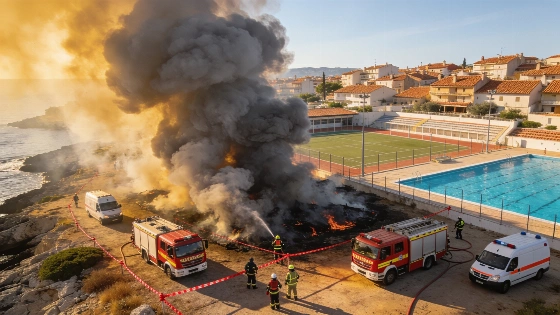
Emergency services responded on Friday to a wildfire with multiple active fronts in Tiana, a municipality just outside Barcelona. Local authorities restricted access to the sports complex area and closed the municipal swimming pool. As the situation escalated, residents of the Colònia Bosc residential development and guests at the Conreria hostel were ordered to remain indoors for their safety.
The Generalitat Fire Brigade mobilized around 15 units, including two aerial teams, to contain the blaze. Thick columns of smoke became visible from various points across the Barcelona metropolitan area, prompting local concern and disrupting daily routines. The deployment focused on protecting people and property in the affected areas.
By midday, authorities had intensified the emergency response, focusing on preventing the fire from spreading further into populated areas. The decision to confine residents and close public facilities was taken as a precaution. Smoke visible across a wide area also raised concerns about possible effects on air quality and local mobility.
Wildfires are a recurring challenge in Catalonia, especially during periods of dry weather and high temperatures. The incident in Tiana had not resulted in reported injuries or evacuations beyond the initial lockdowns, and highlighted the vulnerability of suburban communities to sudden environmental hazards. The response followed a period of impressive mobilization of local services during extreme weather events in Spain, including the abrupt end of the heatwave in Madrid, as detailed in this report on the temperature drop in the Madrid region.
Catalonia’s Mediterranean climate and vegetation contribute to wildfire risk, particularly where residential areas are close to forested zones. The Generalitat coordinates preparedness with local councils and emergency services. The fire in Tiana showed why vigilance and community cooperation matter during environmental emergencies, particularly in summer.