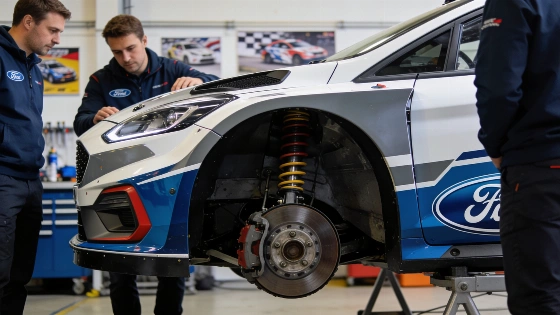
Ford will rejoin the World Rally Championship as a full factory team in 2028, with a new rally car due in 2029. The program will be based on an upcoming European passenger model, bringing rally engineering into Ford’s future road cars, including hybrids and electric vehicles.
For more than a decade, Ford watched from the sidelines. Its last official WRC run ended in 2012 with the Fiesta, but the private M-Sport team kept Ford-based cars such as the Puma on the stages. Now Ford is stepping up again, with the factory in charge and rally set to serve as a test lab for future hybrids and electrics. Motorsport-Total and Auto Motor und Sport report that this will be Ford’s first full factory WRC entry in 16 years.
Spanish fans know this story well. Ford and Spain have a long rally history: Carlos Sainz won two Spanish rally titles in the late 1980s with a Ford Sierra RS Cosworth. Sainz and co-driver Luis Moya helped spark a national passion for the sport, and Ford’s name stuck with Spanish rally fans. Sainz still races with Ford, now in the Dakar with the Ford Raptor.
Ford will again team up with M-Sport, its rally partner for 30 years. The company announced its WRC return during the Sardinia round of the championship, and work on the factory program for 2028 is beginning. The new squad will race a car based on an upcoming European passenger model, with the rally project intended as a test ground for multi-energy vehicles. Jim Baumbick, Ford Europe’s president, says the next Ford lineup will have the same sharp, confident feel as its rally heroes, with hybrids and electrics at the core. Channel NewsAsia reports that Ford is treating rally as a technology program alongside marketing, and that WRC will help shape future hybrid and electric technology.
Ford is rolling out new hybrids and electrics as the car market changes, betting that rally handling and excitement will set its cars apart. The company says drivers will feel rally engineering on ordinary roads as well as on special stages.
Other carmakers are also using motorsport to stay relevant in the electric age, and Ford’s move fits that broader trend.
Ford’s rally history stretches back more than 50 years. Cars such as the Escort and Sierra Cosworth shaped both racing and street culture. The new WRC push aims to revive that spirit and influence the design and feel of Ford’s next European cars.
Ford wants to channel WRC energy and know-how into future hybrids and electrics, bringing driving excitement together with new technology.