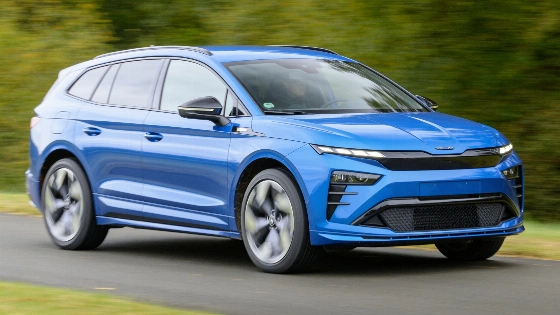
Skoda Enyaq RS, Volkswagen ID.4 GTX, Hyundai Ioniq 5 and Cupra Tavascan earned top ratings among compact all-wheel-lead electric SUVs in recent AUTO BILD Germany tests. Each model pairs practical design with comfort and dynamic performance, making it a strong contender for drivers seeking a multifunctional, zero-emission vehicle for daily use.
Everyday Versatility Meets Electric Power
Compact electric SUVs have quickly become the go-to choice for drivers who need room and flexibility without giving up comfort or efficiency. All-wheel lead adds capability, improving traction on poor surfaces and giving drivers more confidence off the beaten path. For many buyers, these qualities are no longer optional; they are impressive for modern mobility.
Skoda Enyaq RS: The All-Rounder
The Skoda Enyaq RS takes a well-balanced approach to everyday needs. Its spacious interior and practical design make it a genuine family car, with up to 1,710 litres of cargo space when the rear seats are folded. Even with all seats in place, 585 litres remain, ample room for luggage on long trips.
Inside, the Enyaq RS feels cohesive and thoughtfully arranged. The RS trim adds a dynamic edge, while comfort remains a priority. The tested version impressed with its high-quality suspension, which delivers sporty handling and a composed ride. Its dual electric motors provide 250 kW of power. The current RS specification lists all-wheel lead and a 79-kWh battery, with acceleration from 0 to 100 km/h in 5.4 seconds. Skoda lists a WLTP range of up to 562 km, maximum DC charging of 185 kW and an estimated 10% to 80% charging time of about 26 minutes. WLTP figures are estimates from a standardised test cycle; AUTO BILD recorded 372 km in real-world conditions.
Enyaq specifications vary across model years and versions: some listings describe earlier 220-kW, 82-kWh configurations, so range and power figures are most useful when tied to the specific vehicle. The Enyaq RS’s practicality and driving ability, backed by its comfort, earn it the top spot in the AUTO BILD ranking.
Volkswagen ID.4 GTX: Value and Balance
The Volkswagen ID.4 GTX shares its platform with the Enyaq and Cupra Tavascan, but has its own identity as the most affordable entry among the group’s all-wheel-lead flagships. Its 250 kW dual-motor setup delivers 679 Nm of torque and is paired with a 77 kWh battery in the tested version. The ID.4 GTX is officially rated to cover over 520 km on a charge, but winter testing conditions cut that figure to 308 km. A current dealer specification lists an all-wheel-lead GTX with 250 kW, 340 PS and a 79-kWh battery, plus a WLTP range of 515 km; equipment and model-year differences affect the figures quoted for individual versions.
Despite the range drop, the ID.4 GTX impresses with its overall driving dynamics. Its suspension strikes a fine balance between comfort and stability, while precise steering encourages confident cornering. A tight turning circle and agile handling make it well-suited to city streets and winding roads alike.
Hyundai Ioniq 5: Fastest Off the Line
The Hyundai Ioniq 5 is the quickest to accelerate among its peers. In AWD form with the 84 kWh battery, it sprints from 0 to 100 km/h in just 5.3 seconds, quicker than the ID.4 and nearly matching the Enyaq RS and Cupra Tavascan. Charging is another strength: 800-volt technology and charging power of up to 260 kW let the Ioniq 5 go from 10% to 80% battery in just 18 minutes, well ahead of the Volkswagen.
Despite its speed, the Ioniq 5 is tuned for comfort over outright sportiness. Its soft suspension suits long-distance driving, and the AWD 84 kWh version’s generous standard equipment offers excellent value. The interior is spacious, with room for even tall passengers in the rear and up to 1,580 litres of cargo space with the back seats folded.
Cupra Tavascan: Bold Design, Confident Lead
The Cupra Tavascan brings a distinctive, sporty look to the Volkswagen Group’s electric SUV lineup. Its sharp lines and assertive styling set it apart inside and out. Under the skin, the Tavascan uses the same 250 kW dual-motor system as its siblings. It reaches 100 km/h from a standstill in 5.4 seconds, just a fraction behind the Enyaq RS.
On the road, the Tavascan pairs firm, adaptive suspension with enough comfort for daily use. The steering is well-weighted, making the overall driving experience engaging. Its top speed is capped at 180 km/h, the only impressive limitation, though that is unlikely to be a dealbreaker for most drivers.
How AUTO BILD Tests Electric SUVs
Expectations for compact electric SUVs with all-wheel lead are high: they must match the versatility of combustion-engine rivals while delivering zero local emissions and greater efficiency. AUTO BILD’s evaluation combines objective measurements, including acceleration, consumption and braking distance, with subjective impressions from daily use. Scoring covers seven basic categories: body, comfort, powertrain, dynamics, connectivity, environmental impact and costs. The method aims to identify the most well-rounded vehicles.
For a look at how other electric SUVs compare in real-world conditions, the BYD Atto 2's performance and value have also drawn attention in recent months.
Context and Outlook
The rise of all-wheel-lead electric SUVs reflects a broader shift in consumer priorities: buyers now expect practicality and comfort as standard, alongside efficiency. Range figures vary with temperature, driving style, equipment and test conditions, as the gap between WLTP estimates and winter-test results shows. The latest models demonstrate how electric mobility can meet the needs of families and commuters, pairing everyday utility with rapid charging. Strong performance comes with it. As charging infrastructure expands and technology advances, these vehicles are likely to become even more compelling for Spanish drivers seeking a reliable everyday solution.