Galicia is betting on Xacobeo 2027 to redefine its business tourism sector. With a focus on premium experiences and sustainable growth, the region aims to attract high-spending visitors and position itself as a year-round MICE destination.
Galicia is looking to Xacobeo 2027 as a chance to reshape its business tourism sector. The regional government wants the Holy Year to do more than draw pilgrims—it aims to use the event to strengthen the Meetings, Incentives, Conferences, and Exhibitions (MICE) industry.
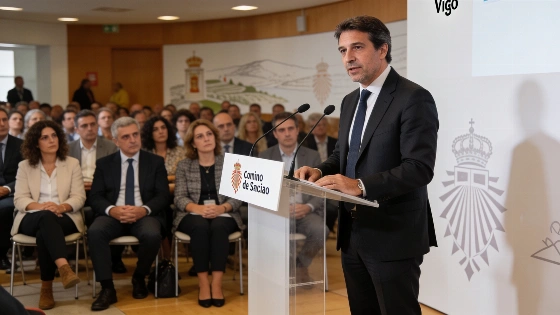
At the Foro MICE Galicia in Vigo, Xosé Merelles, director of Turismo de Galicia, described Xacobeo 2027 as a turning point for business tourism in the region. He said the strategy is focused on long-term planning, not just short-term trends. The main goal is to move away from seasonal peaks and attract high-value visitors throughout the year. Diario de Santiago reported that the event in Vigo had support from Xunta, Galicia Calidade, Xacobeo 2027, Diputación de Pontevedra, and several industry associations, showing broad institutional backing.
Foro MICE Galicia brought together 17 national associations, 4 professional associations, and over 40 companies, demonstrating the scale of industry support for linking business tourism with Xacobeo 2027.
Merelles pointed to the numbers: business tourism already makes up 1.2% of total tourist spending in Galicia, with an average daily spend of over 200 euros per person—more than triple the general tourist average of 59 euros. Most of these visitors, over 85%, come from other parts of Spain. Diario de Santiago notes that the Xunta is preparing incentives and sponsorships to attract congresses and conventions, tying these efforts directly to Xacobeo 2027.
Merelles also argued that professional events help the local economy by giving visitors a direct experience of Galicia’s culture, food, and natural surroundings. He sees Xacobeo as a way to make MICE tourism a driver for internationalization and economic growth. According to El Correo Gallego, industry voices say Santiago de Compostela is well-suited for business tourism, but its infrastructure works best for medium-sized events, not very large congresses of 5,000 or more.
The region’s approach builds on lessons from previous Holy Years, going back to Xacobeo 93. The Xunta credits these events with modernizing infrastructure, improving communications, and expanding hospitality capacity. Now, the focus is on bringing MICE into the Xacobeo 2027 agenda through premium experiences and a sponsorship plan that encourages public and private collaboration. Fiscal incentives for private sponsors are also being considered. Diario de Santiago highlights that the sector sees MICE as a way to reduce seasonality and support economic activity outside the busiest months.
The practical impact of Xacobeo 2027 is already visible: major events like La Vuelta 2027 will start in Santiago de Compostela, with at least four stages planned in Galicia. Official communications from Xunta also confirm that international promotion efforts are underway, including the installation of the first Camino de Santiago marker in Ireland and expanded campaigns in markets such as Germany, the UK, and Italy.
Visibility is another focus. In the last months of the year, Galicia will take part in six major industry events, including MIS Internacional in A Coruña, MICE & Forum Inside CEW in Cádiz, the Luxury Travel B2B Showcase in London, IBTM World in Barcelona, and two editions of the Global MICE Forum in Madrid and Córdoba. These appearances are meant to strengthen Galicia’s presence in both national and international MICE circles.
Sustainability and social responsibility are part of the plan. Merelles said Galicia and the Camino de Santiago offer an ideal setting for responsible, locally connected conferences that have a positive impact beyond the event itself. The region wants to combine professional standards with quality of life and respect for its environment.
Galicia’s push to use Xacobeo 2027 for MICE tourism is deliberate. By grounding its strategy in data, experience, and a focus on sustainability, the region is aiming for long-term, high-value growth.