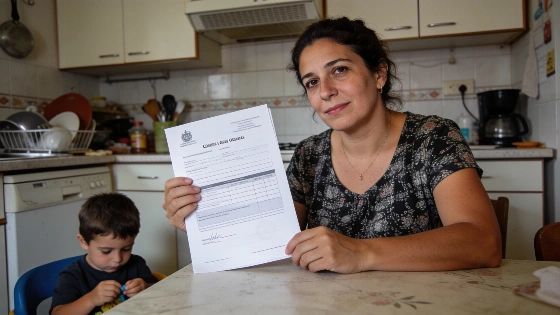
A divorced mother from Vigo will recover €2,520 in Ingreso Mínimo Vital after a court ruled she did not act in bad faith, despite exceeding the income threshold. The decision highlights the importance of subsistence benefits and the limits of automatic claims by Social Security.
When the Tribunal Superior de Xustiza de Galicia ruled on July 16, 2026, it brought closure to a two-year dispute between a divorced mother from Vigo and Spain's Social Security. The woman, who has a dependent child, had been ordered to repay €2,520 in Ingreso Mínimo Vital (IMV) after authorities found her annual income exceeded the eligibility threshold by €1,400. Yet the court found that she neither requested the benefit nor concealed any information, and that the payment was granted automatically.
The case began when the Instituto Nacional de la Seguridad Social reviewed her IMV payments for 2020 and 2021. Although her total annual income reached €11,144—including €3,600 in child support—the official limit for IMV eligibility was €8,705. Over 16 months, she received the benefit without actively applying for it, and all her income sources were declared.
Initially, the Juzgado de lo Social No. 4 in Vigo sided with Social Security, supporting the demand for repayment. The mother appealed, arguing that she had not misled authorities or acted in bad faith. The higher court agreed, emphasizing that the IMV is designed to cover basic subsistence needs and that the woman had not contributed to any improper payment through false statements or omissions.
The tribunal cited the Cakarevic doctrine, which holds that repayment should not be required when the recipient has not engaged in deception or misconduct, especially when the benefit addresses essential living needs. The court also noted that the IMV was granted automatically, without any application or manipulation by the beneficiary.
While the ruling applies specifically to this case, it underscores the importance of context in Social Security disputes. The court made clear that not all overpayments are exempt from recovery, but that the absence of fraud, bad faith, or active application can be decisive. The mother will now recover the €2,520 previously claimed by Social Security.
This decision comes as Spain continues to refine its approach to social benefits and eligibility. Recent changes to unemployment subsidies, such as the new rules allowing short-term workers to access support with just 90 days of contributions, reflect ongoing debates about fairness and access in the welfare system. For more on these developments, see the analysis of recent changes to unemployment subsidies in Spain.