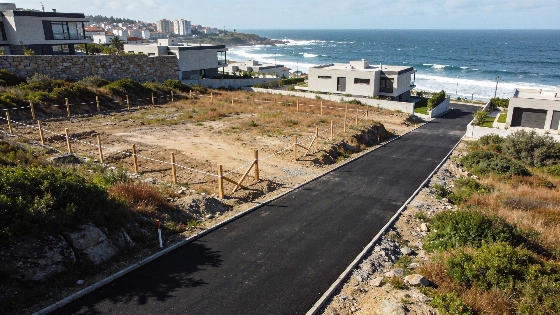
The TSXG has reversed a previous court decision that blocked five luxury villas in Cabo Estai. Judges found the legal challenge was fraudulent and filed out of time. The ruling supports the original municipal license.
The Tribunal Superior de Xustiza de Galicia (TSXG) has reversed a lower court's annulment of a municipal license for the development of five luxury villas in Cabo Estai, Vigo. The court determined that the legal challenge against the project was based on a fraudulent use of the law and was filed after the legal deadline, restoring the validity of the original permit granted by the city council.
The dispute began when a Vigo court invalidated the license in November 2025, citing the absence of a required public road in the urban plan. The initial ruling argued that the land division did not meet the legal condition that plots must be bordered by existing or newly created roads. Instead, only a pedestrian path was present, leading the court to conclude that the permit should not have been issued for the site on Antonio Cominges street in the Oia district.
However, the TSXG found that the subsequent appeal was not only untimely but also constituted an abuse of legal process. The court noted that a neighborhood association, Asociación Veciñal San Miguel de Oia, had already attempted to challenge the same licenses in 2022, but their case was definitively dismissed in February 2024. After this, an individual, presenting himself as an environmental activist, filed a nearly identical complaint using the same lawyer and documentation as the association. The court concluded this was an attempt to circumvent the previous final judgment by using a third party as a front.
In its decision, the TSXG did not address the substantive urban planning issue of whether a public road existed, focusing instead on the procedural defects of the new complaint. The judges emphasized that the appeal was lodged more than three months after the license was granted, far beyond the one-month (administrative) or two-month (judicial) deadlines for such challenges. As a result, the license had become final and could no longer be contested.
Vigo's councillor for Urbanism, María José Caride, welcomed the ruling, stating it confirmed the legality of the original license. She highlighted that the court recognized the 2008 general plan already included the required road, as reflected in the provisional planning instrument under which the license was issued. Caride also expressed support for the municipal urban planning staff involved in the case and called on political opponents to apologize for questioning their work.
This case highlights the complexities of urban development disputes in Spain, where procedural errors and repeated legal challenges can delay or derail major projects. The TSXG's decision underscores the importance of adhering to legal deadlines and the risks of attempting to reopen cases through indirect means. Similar procedural hurdles have affected other high-profile legal matters in Spain, such as the delays in processing citizenship applications under the 'ley de nietos', as reported in recent coverage of consular backlogs. In the context of real estate and urban planning, the ruling may serve as a precedent for how Spanish courts handle repeated or strategically timed legal actions against municipal decisions.
Galicia, and particularly the Vigo area, has seen increased scrutiny of luxury developments in recent years, reflecting broader national debates over land use, environmental protection, and the role of local government in regulating high-value real estate projects. The TSXG's intervention in this case reaffirms the authority of municipal planning decisions when legal procedures are properly followed and may influence future challenges to similar developments across the region.