The majority of 2.4 million applicants for Spanish nationality under the 'ley de nietos' will not complete the process before 2027. Consular backlogs and slow procedures mean most cases will not be resolved this decade.
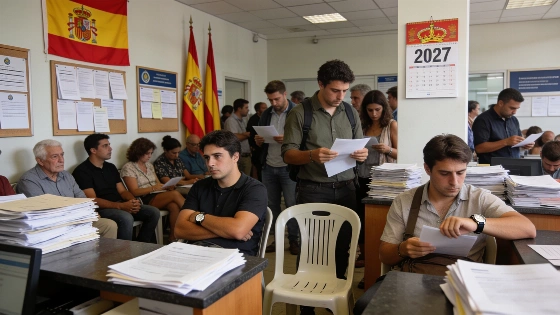
Claims of an imminent electoral shift due to mass naturalizations under the 'ley de nietos' are contradicted by the pace of Spain’s consular system. Despite 2.4 million people requesting appointments to apply for Spanish nationality as descendants of exiles and emigrants, most will not even submit their documents before summer 2027. According to diplomatic sources, the bulk of these cases will remain unresolved well into the next decade, making any significant impact on upcoming elections highly unlikely.
The main bottleneck is the overwhelmed consular network, which has struggled to keep up with the surge in applications. Reinforcement measures announced by the Ministry of Foreign Affairs have either not yet materialized or are insufficient to accelerate the process in time for the next general elections. Contrary to claims from the Partido Popular and Vox about rushed naturalizations, the reality is a slow, frustrating process for applicants.
The Consulate General of Spain in Buenos Aires illustrates the scale of the challenge. Since October 2022, it has received 645,052 applications—one quarter of the global total. By June 2026, only 224,334 people had managed to submit their documents, and just 30,000 cases had been resolved. This represents only 13% of initiated cases and less than 5% of the total expected. For comparison, under the previous 'Ley de Memoria Histórica', the same consulate took 13 years to process 60,000 cases; now, it faces ten times that number.
Projections indicate that the Buenos Aires consulate will continue collecting documents from those who booked appointments before the October 2025 deadline until at least 2030 or 2031. As of now, appointments are scheduled through March next year, with thousands more to be called in the following months. After document collection, each file must be verified and assessed, a process that currently results in about 1,800 monthly resolutions—only half of which relate to the 'ley de nietos'. This means that, at best, around 10,000 new citizens could be added in Buenos Aires before the next elections, but not all would be eligible to vote due to age restrictions and electoral roll deadlines.
Concerns raised by Madrid’s regional president, Isabel Díaz Ayuso, about the strategic allocation of new voters are also addressed by the process: new citizens must request their voting district themselves, providing justification and documentation, and cannot simply be assigned to key provinces by consular staff.
The slow pace is largely due to limited staff. Of the 100 employees at the Buenos Aires consulate, only about 15 handle civil registry matters, including not just the 'ley de nietos' but also births, deaths, and marriages. From 2022 to 2026, the consular register grew by just 21,293 people, a 6.3% increase. Planned reinforcements include 29 temporary positions, but some may be filled by staff whose contracts are ending. A digitalization project with the public engineering firm Ineco could eventually speed up processing, but its impact will not be felt before the next elections.
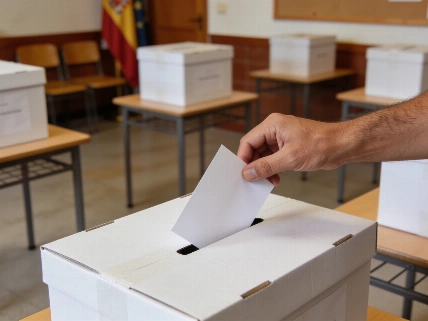
Political assumptions that new overseas voters will favor the left are not supported by recent results. In the 2023 general elections, the Partido Popular gained a Madrid seat thanks to CERA votes. In the May 2026 elections for the Council of Spanish Residents in Buenos Aires, the PP won a majority of seats, with the PSOE and an independent list trailing.
The General Council of Spanish Citizenship Abroad (CGCEE) has strongly opposed any measures that would restrict or complicate voting rights for Spaniards abroad. The CGCEE warns that suspending postal voting, as proposed by Vox, would effectively disenfranchise thousands living far from consulates and embassies, violating constitutional guarantees. The council also expressed concern over rhetoric questioning the legitimacy of nationality for descendants of exiles and emigrants, emphasizing that citizenship granted under current law is a legitimate right that must be respected.
For context, the 'ley de nietos' is a provision within the Ley de Memoria Democrática, allowing descendants of Spanish exiles and emigrants to apply for nationality. The process requires applicants to book appointments at Spanish consulates, submit extensive documentation, and await verification and approval. The CERA (Censo Electoral de Residentes Ausentes) is the electoral roll for Spaniards living abroad. The slow pace of processing, combined with administrative and legal requirements, means that the feared electoral impact of these new citizens is, for now, more political narrative than practical reality.