Young musicians in Galicia are getting crowds to sing in Galician—even those from Spanish-speaking homes. Viral tracks and packed shows point to a real cultural shift, challenging official language policies and reaching far beyond the region.
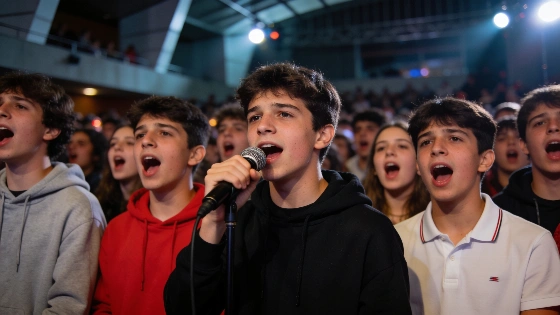
Thousands of teenagers in Galicia now sing in Galician at concerts, including many from families where only Spanish is spoken. This shift isn’t the result of government campaigns or academic warnings about language loss. Instead, it comes from a new wave of urban musicians who have turned the regional language into a symbol of identity and coolness. Packed venues and viral tracks have made artists like 9Louro and Lg1do into unexpected cultural leaders, drawing crowds that once seemed out of reach for Galician-language music.
At the center of this movement is 9Louro, a 22-year-old from Muros whose shows sell out in minutes. His lyrics openly celebrate the fact that young people are learning Galician just to sing along. Alongside acts like The Rapants, Lg1do, and Dirty Suck, he’s helped create a scene not seen since the Xabarín Club era in the 1990s. The Lingua Urbana festival in Santiago recently drew 6,000 fans—a number that would have been hard to imagine for Galician-language acts just a few years ago.
In September 2026, 9Louro was featured as a headliner at the official As Dores festival in Lalín, marking his ascent to major regional live events.
What sets these artists apart isn’t just their use of Galician, but their refusal to clean it up for the stage. Many write and perform in the dialects and slang of their hometowns, mixing in English and Spanish when it fits. The result feels true to their generation, far from the academic or institutional approach that hasn’t stopped the language’s decline among youth. The Real Academia Galega says 32% of children and teenagers in Galicia can’t speak Galician at all, yet these concerts are packed with young people who know every word.
Lg1do, an 18-year-old from Santa Comba, started recording music in his closet and now has 185,000 monthly listeners on Spotify. His breakout hit, "Darche," climbed the Viral50:España chart and brought Galician lyrics to a national audience. He says using Galician isn’t a calculated move—it’s just natural. In fact, he’s gotten more criticism for using Spanish in some songs than for sticking to his mother tongue. The appeal isn’t limited to public schools; private school students and even those from Spanish-only homes are now singing in Galician at shows.
Managers and artists say the real draw is honesty. Álvaro Creo, who manages both 9Louro and The Rapants, believes that singing in the language and dialect learned at home is what connects with fans. The trend has spread beyond Galicia, with bands like The Rapants gaining attention for their humor and energetic shows. Their songs, full of local references and playful wordplay, have become anthems for a generation that sees Galician as alive and flexible, not something old-fashioned.
In September 2026, the Xunta of Galicia announced new concerts across Spain as part of the AIEnRUTa-Artistas program, featuring Galician urban acts like Mondra, Montedapena, and mariagrep & Mundo Prestigio, highlighting growing institutional support for the scene beyond the region.
Still, the movement has its contradictions. While the Xunta’s language policies have struggled to reverse the decline of Galician in daily life, these young artists have managed to make the language appealing to those least likely to use it. The trend has even reached students at religious schools, who admit to spending days memorizing lyrics before concerts. As one group of 14-year-old girls put it, they feel proud to sing in Galician, even if it was never spoken at home.
Some compare this cultural shift to the way sports can unite communities across language lines. Just as Carlos Alcaraz brings fans together regardless of background, these musicians are bridging divides that official policy could not. But here, the language itself is the rallying point, not just the medium.
The rise of Galician urban music challenges the idea that language decline is inevitable. The success of these artists shows the limits of top-down policy and suggests that cultural relevance, not regulation, drives real change. When teenagers from all backgrounds are willing to learn a language just to join in at a concert, it’s clear that the future of Galician will be shaped on stage and in playlists—not in government offices.