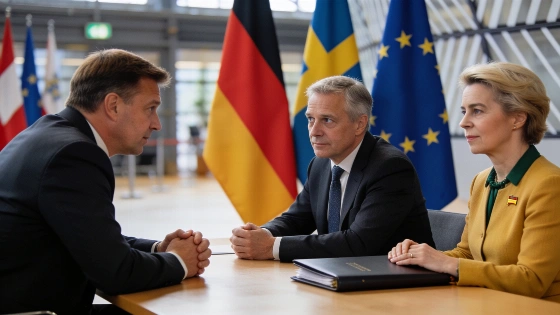
Germany, Sweden, and Lithuania have rejected Spain’s push to tie EU enlargement to official recognition of Catalan and other regional languages. Madrid’s threat to veto expansion talks has landed flat with key European partners.
Germany has taken the lead in a growing backlash against Pedro Sánchez’s plan to block EU enlargement unless Catalan, Basque, and Galician become official EU languages. Spain tried to use its support for EU expansion as leverage for regional language recognition. That move drew a direct, public pushback from several member states. On September 22, 2026, reports confirmed Spain’s demand: no new EU enlargement without progress on official status for these languages. Key partners have met this with skepticism and resistance.
At the latest General Affairs Council, Germany, Sweden, and Lithuania broke with protocol. They spoke up on a topic that was only supposed to be for information. Their message was clear. The process of admitting new countries to the EU should not be held up by Spain’s domestic language agenda. Gunther Krichbaum, Germany’s Secretary of State for Europe, made his opposition clear before the meeting even started. “I am against a bilateralization of European integration,” he said. He called for “a greater European spirit,” drawing a line between enlargement and language policy. European news outlets report that most countries agree these issues should stay separate.
One of the main procedural barriers to changing the EU's language regime is the requirement for unanimous agreement among all member states, making any reform extremely difficult.
Sweden’s EU Minister, Jessica Rosencrantz, backed this stance. She said Sweden still supports moving forward with accession talks for Montenegro and other candidates. “I do not believe these questions should be linked in this way,” she said, distancing Sweden from Spain’s approach. Lithuania’s Deputy Foreign Minister, Sigitas Mitjus, was just as direct: “For Lithuania, this link is not acceptable.” Official statements in leading European media confirm that both Sweden and Lithuania do not support tying enlargement to the language issue. This shows Spain’s approach is not catching on in northern and eastern EU countries.
Spain’s Secretary of State for the EU, Fernando Sampedro, was sent to formally deliver Madrid’s threat to veto enlargement if its language demands are not met. This position was already set out by Foreign Minister José Manuel Albares and comes straight from the Moncloa. Sampedro argued it is time to end what he called discrimination against 20 million Spaniards and Europeans living in regions with more than one official language. He said Catalan, Basque, and Galician should be added to the EU’s list of official languages. The proposal has been on the table for three years. Spanish government sources say the argument is based on non-discrimination for citizens in multilingual regions.
Despite these arguments, Spain has not convinced its European partners. Germany’s leadership in opposing the move matters, since Berlin’s position often shapes how other countries vote. The fact that these countries spoke out without being prompted shows they do not want Spain’s internal language politics to set the pace or terms of EU enlargement.
The current debate has roots going back to at least 2023, when Spain first began pushing for the official status of Catalan, Basque, and Galician in Brussels. After more than a year without progress, Madrid has now intensified its campaign and is using the enlargement agenda as leverage.
Spain’s attempt to tie the fate of aspiring EU members to the recognition of its regional languages has left Madrid isolated. It also shows the limits of using national interests as leverage in European talks. The message from Berlin, Stockholm, and Vilnius is clear: the future of the EU’s borders will not depend on the status of Catalan in Brussels. For Sánchez, this episode shows the risk of pushing domestic priorities too far in Europe, especially when the continent’s biggest powers refuse to bend. European policy analysts warn that candidate countries like Montenegro and Albania could see their accession process tangled up in Spain’s internal politics—a scenario the EU wants to avoid.