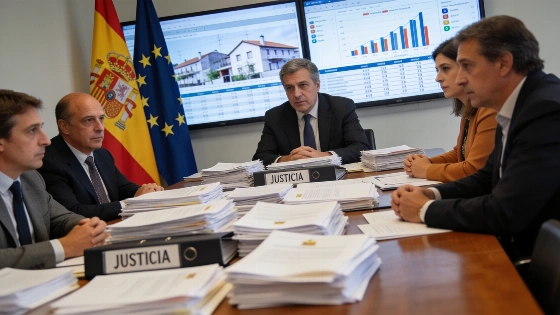
Spain's government accelerates key reforms on housing, dependency, and regional funding. Judicial scandals and political tension shape a critical July before the summer break. Major decisions could define the end of the legislature.
Spain's government is racing to approve a series of major reforms in July, aiming to shift public focus away from ongoing judicial scandals and demonstrate legislative progress before the summer recess. With the legislature under strain from high-profile investigations, including the recent indictment of the director general of the Guardia Civil, Mercedes González, ministers are intensifying efforts to deliver on housing, dependency, and regional financing.
The most anticipated move is a sweeping housing decree, expected to reach the Council of Ministers this month. Negotiated by Isabel Rodríguez (PSOE) and Pablo Bustinduy (Sumar), the proposal goes beyond extending rental protections. It includes reforms to seasonal rentals and offers flexibility for parliamentary groups to add their priorities, in hopes of securing broad support. The outcome hinges on Junts, especially as the European Court of Justice is set to rule on Carles Puigdemont's possible return to Catalonia on July 16. Despite this uncertainty, both PSOE and Sumar express optimism, citing strong social pressure for housing reform and room for negotiation.
Another key milestone is the planned overhaul of Spain's dependency system. On July 14, a decree is scheduled for a vote that would increase state funding for dependency care to €7.2 billion annually by 2027 and introduce legal reforms. Sumar, currently redefining its political space and searching for a new candidate, sees this as crucial for justifying its role in government. However, support from the opposition Partido Popular (PP) remains unclear.
Budget negotiations are also intensifying. The Council of Fiscal and Financial Policy begins discussions this week on deficit targets with regional finance ministers. Finance Minister Arcadi España is expected to secure approval with PSOE votes and a handful of allied regions, while the PP maintains its opposition. Two parliamentary votes on the deficit path are set for July 14 and 21, likely to fail, but the budget process will continue under previous guidelines. Later in July, attention will turn to reforming the regional financing system—a contentious issue, as some PSOE-led regions are wary of changes that could favor Catalonia, Valencia, and Andalusia, despite overall funding increases.
Internationally, Prime Minister Pedro Sánchez will attend the NATO summit in Ankara, with his wife Begoña Gómez seeking judicial permission to travel after her passport was withdrawn. Sánchez remains the only European leader opposing a 5% defense spending target, arguing it would require deep social cuts. The summit comes amid threats from Donald Trump regarding Spain's NATO membership, which, while seen as unrealistic, add to the political stakes.
July will also see the release of official figures on the extraordinary regularization of immigrants, a move Sánchez wants to highlight as a unique political achievement in Europe. Polls indicate a divided public, but Sánchez believes a strong pro-immigration stance is the best response to the far right, rather than adopting exclusionary rhetoric.
Meanwhile, the new PP-Vox agreement in Andalusia provides the government with ammunition to challenge the PP's image of moderation. The deal, which incorporates much of Vox's platform, is used by Sánchez's team to mobilize the left, warning of the growing possibility of a PP-Vox government in Madrid, as similar coalitions already exist in several regions.
Despite the government's vulnerability due to judicial investigations and scandals, officials remain confident that PP missteps—such as the controversy over the 'ley de nietos'—will help them regain ground. The government is betting on legislative achievements and positive economic data to shift the narrative, while the PP focuses on amplifying the impact of ongoing scandals. The coming months will reveal which strategy prevails.
Spain's political landscape in 2026 is marked by intense competition between the government and opposition, with legislative productivity and judicial scrutiny shaping the public debate. The housing crisis, dependency care, and regional funding remain central issues for millions of residents. According to official data, Spain's labor market has reached a record 22.47 million affiliates, reflecting economic resilience despite political turbulence. The outcome of July's legislative push could influence not only the government's legacy but also the direction of the next general elections.