Spain’s government has approved a partial pardon for Laura Borràs, cutting her prison sentence in half. The decision, made at the final cabinet meeting before summer, also affects four others, including a former mayor and a cultural manager.
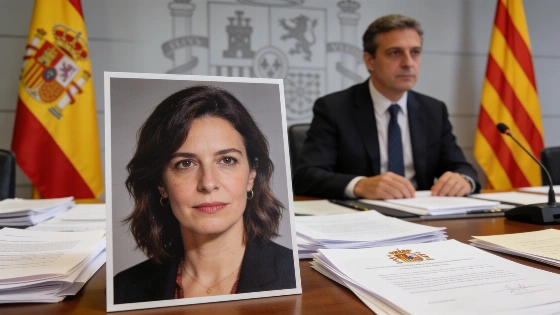
Spain’s Council of Ministers has granted a partial pardon to Laura Borràs, the former president of the Catalan Parliament and a leading figure in Junts. The move, confirmed at the last cabinet meeting before the summer break, reduces her prison sentence from four and a half years to two years. However, the court-imposed fine and a ban from holding public office for just over four years remain unchanged.
The Ministry of Justice stated that the pardon follows the recommendations of the Tribunal Superior de Justicia de Cataluña, which originally sentenced Borràs. The court had previously described the prison term as “disproportionate and excessive,” a view that influenced the government’s decision to commute part of her sentence. Borràs is one of five individuals to receive similar partial pardons in this round.
Among the other beneficiaries is Natalio Grueso, a well-known artist and cultural manager. Grueso had been sentenced to eight years in prison, eight years of disqualification from public office, and a fine. The government has pardoned the remaining prison time, citing humanitarian reasons related to his health, while the other penalties remain in force. His case had drawn support from numerous artists and figures in the audiovisual sector.
Another recipient is Juan Fernández Gutiérrez, the former mayor of Linares in Jaén. His three-year prison sentence has been reduced to two years, but a seven-year ban from public office is upheld. The pardon for Fernández Gutiérrez was backed by the sentencing court, local branches of both the PP and PSOE, the Linares city council, and a neighborhood association that collected signatures in his favor.
The cabinet also approved partial pardons for two individuals convicted of drug-related offenses. Their prison terms, originally three and four and a half years, have each been reduced to two years. Both cases had favorable reports from the sentencing courts and the public prosecutor’s office.
Partial pardons in Spain are rare and typically require a combination of legal, humanitarian, or social considerations. The government’s decision to act on the recommendations of sentencing courts is seen as an effort to balance judicial authority with executive discretion. In the case of Laura Borràs, the reduction in prison time does not affect her disqualification from public office, which remains a significant barrier to her return to political life. Pardons in Spain do not erase criminal records but can alter the practical consequences of a conviction, especially regarding imprisonment. The announcement comes at a time when the use of pardons continues to generate debate about the separation of powers and the limits of executive intervention in judicial matters.