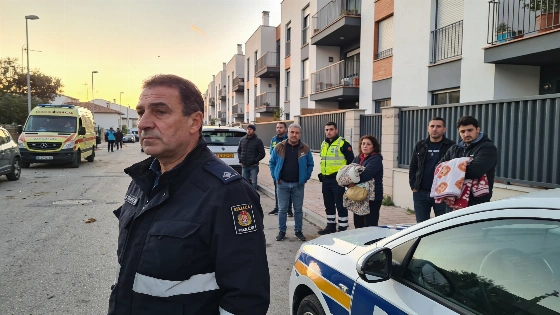
Granada and its suburbs experienced five perceptible earthquakes in just five hours. The strongest, magnitude 2.3, struck La Zubia. Authorities report over 40 tremors in total, raising concerns about the ongoing seismic activity.
Granada’s metropolitan area woke up to a series of tremors on Wednesday, with five earthquakes felt by residents in just five hours. The strongest, a magnitude 2.3 quake, struck La Zubia at 10:35 a.m., showing that seismic activity in the region continues.
Minutes after the first quake, La Zubia was shaken again by a 1.6 magnitude event at a depth of five kilometers. Earlier in the morning, Churriana de la Vega recorded a 1.6 magnitude quake at 5:07 a.m., Huétor Vega had a 1.5 at 7:54 a.m., and Granada city registered a tremor at 9:22 a.m., this one twelve kilometers below the surface.
By August 31, the seismic series in Granada had reached 1,430 recorded earthquakes in just 17 days, according to the Instituto Geográfico Nacional.
The Instituto Geográfico Nacional (IGN) reports that these quakes are part of the ongoing Alhendín seismic series, active since August 14. Only five of the day's tremors were strong enough to be felt, but by midday, IGN had counted more than 40 seismic events in the area since dawn. Most were too weak for people to notice, but the number and spread of epicenters mark a clear increase in activity.
Unlike previous days, the epicenters were scattered across a wider area, from the southern metropolitan belt to towns like Maracena, Albolote, Santa Cruz del Comercio, and Loja. This broader distribution makes monitoring and response more complicated, as local authorities now have to track a larger region for possible aftershocks or damage. According to EFE and IGN, the current sequence began with a magnitude 3.7 quake on August 14, followed by two larger events of magnitude 4.8 on August 15 and August 18, with epicenters near Alhendín and the Gójar–Otura area.
For residents, the repeated tremors have become a regular source of worry. No injuries or major damage have been reported, but the ongoing activity has increased anxiety and led to renewed attention to emergency plans. The IGN continues to monitor the situation, but with no sign that the seismic series is ending, people remain uncertain about when things will settle down.
By September 1, the Andalusian government had requested a state of civil protection for 16 municipalities affected by the seismic series, reflecting a shift from simple monitoring to emergency response. Meanwhile, compensation claims for earthquake-related damages in Granada surpassed 10.5 million euros by September 2, indicating the growing financial impact of the ongoing tremors.
Recent weather extremes have already put local infrastructure under strain, as seen in the recent yellow alert for storms in Castellón. Now, Granada’s seismic instability adds another risk for both residents and authorities.
What stands out is not the strength of individual quakes, but their frequency and unpredictability. IGN data shows a persistent and widespread pattern, making it harder to predict where or when the next tremor might happen. In a region used to seismic activity, this series is a reminder that even moderate quakes, when frequent and spread out, can disrupt daily life and test the resilience of local communities. For now, authorities and residents remain alert as Granada faces this ongoing challenge.