A suspended Guardia Civil commander told the court he was offered a top advisory role in exchange for confidential UCO information. The case exposes alleged attempts to obstruct major corruption investigations involving political figures.
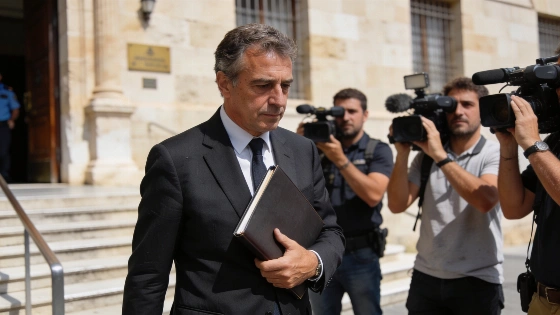
A suspended commander of the Guardia Civil, Rubén Villalba, has confirmed before Spain’s Audiencia Nacional that he was approached by Leire Díez, a former PSOE member, with an offer to become an adviser to the director of the Guardia Civil or to take a post abroad. According to Villalba’s testimony, this proposal was made in exchange for providing sensitive information about the Central Operative Unit (UCO), which is responsible for investigating high-profile corruption cases.
Villalba, who is under investigation in the so-called ‘caso Koldo’, detailed to Judge Santiago Pedraz that he met with Díez on two occasions in March 2025. During these meetings, Díez allegedly offered to pay for his legal defense and secure him a senior position within the Guardia Civil if he agreed to help disrupt UCO investigations and supply details about key personnel, anti-corruption prosecutors, and businessman Víctor de Aldama, who has been sentenced by the Supreme Court to four and a half years in prison for his role in the case.
The commander stated that he refused all offers and did not share any confidential information. Documentation of these meetings, prepared by Villalba himself, has been added to the case file. Among the roles discussed was the position of adviser to Mercedes González, the current director of the Guardia Civil. González has publicly acknowledged that Díez suggested Villalba for a post but insists she rejected the idea and denies any involvement in efforts to undermine the UCO. González is scheduled to testify as an investigated party on July 16 and maintains she has never participated in any plot against the anti-corruption unit.
The investigation led by Judge Pedraz is examining a network allegedly orchestrated by Díez and former PSOE Organization Secretary Santos Cerdán, aimed at obstructing judicial probes and gathering intelligence on judges, prosecutors, and Guardia Civil officers handling cases linked to the ruling party and the circle of Prime Minister Pedro Sánchez. The inquiry covers nine potential offenses, including criminal organization, disclosure of secrets, inducement to perjury, false accusation, document forgery, malfeasance, influence peddling, and crimes against state institutions.
Villalba’s testimony is part of a series of witness statements ordered by the court. On the same day, Patricia Espinar, co-founder of the digital outlet Crónica Libre, and Francisco Ortega, a Correos employee who arranged meetings between Díez and Villalba, also appeared before the judge. Both confirmed their previous statements to the UCO. Espinar distanced herself from the alleged scheme and clarified her role in a PSOE advertising campaign during the 2024 European elections, stating that she was instructed by a colleague to invoice for services related to online advertising. Ortega confirmed he knew both Villalba and Díez, and that Díez, his supervisor at Correos, asked him to facilitate a meeting with the commander.
The case has drawn attention to the intersection of political influence and law enforcement in Spain. It follows a series of high-profile scandals involving attempts to interfere with judicial investigations. For example, recent scrutiny of the Guardia Civil’s leadership and the government’s response has been highlighted in related coverage, such as the government’s decision to support Mercedes González despite ongoing internal probes, as reported in coverage of the government’s stance on the Guardia Civil director.
Spain’s anti-corruption efforts have faced repeated challenges in recent years, with several cases exposing alleged attempts to manipulate or obstruct investigations into political and business figures. The UCO, as a specialized unit, plays a central role in these probes, making any attempt to compromise its work a matter of national concern. The ongoing judicial process is expected to clarify the extent of the alleged network’s activities and its impact on the integrity of Spain’s law enforcement and judicial systems.