Eastern Spain is on edge as storms threaten to dump up to 60 litres of rain per square metre in just one hour. Emergency warnings are active across Aragón, Baleares, Castilla-La Mancha, Cataluña, and the Comunidad Valenciana, with officials urging people to stay alert for flash floods and strong winds.
Spain’s weather agency Aemet has put five eastern regions on orange alert. Up to 60 litres of rain per square metre could fall in just one hour today. Aragón, Baleares, Castilla-La Mancha, Cataluña, and the Comunidad Valenciana are all bracing for violent storms. Emergency protocols are already in place. AEMET bulletins and reports from EFE and RTVE confirm that emergency services are on high alert for flash floods and dangerous winds.
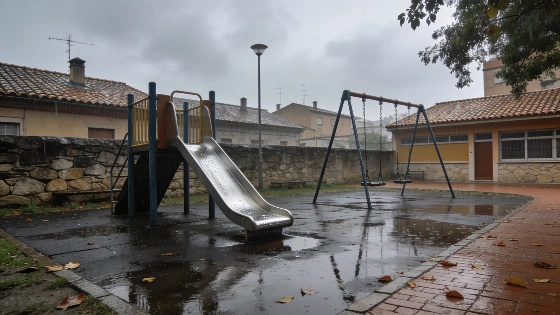
The Comunidad Valenciana faces the highest risk. Forecasts show 50 to 60 litres of rain per square metre could fall in an hour. Some areas may see totals between 80 and 160 litres over twelve hours. Strong winds and hail are also likely. Local authorities in Valencia, Castellón, and northern Alicante have closed parks and schools and issued safety warnings. The Ayuntamiento de València confirmed these steps in official updates.
AEMET issued a special warning for prolonged heavy rainfall starting October 1, with dangerous weather expected to persist at least until Monday, October 5, particularly across eastern Spain and the Balearic Islands.
Cataluña’s southern coast and pre-coastal Tarragona are also under orange alert. Up to 40 litres per square metre could fall in an hour, with 100 litres possible over twelve hours. Large hail and strong winds are expected. The central depression of Lleida and Tarragona faces similar threats, with 30 litres per hour possible. Barcelona and Girona are on yellow alert for 20 litres per hour and strong storms. Infobae and La Vanguardia report that the south of Tarragona and inland areas are most at risk. The rest of Catalonia is being closely watched for severe thunderstorms.
In Castilla-La Mancha, the Serranía de Cuenca is under orange alert for 30 litres per hour. Albacete and Guadalajara are on yellow alert for 20 litres per hour. Aragón’s Albarracín and Jiloca regions in Teruel could see similar rainfall. The rest of Aragón is on yellow alert for storms, hail, and fierce winds. These alerts are based on the latest meteorological data. AccuWeather’s independent forecasts confirm the high risk for Valencia’s northern coast.
On the Balearic Islands, the south of Mallorca is under orange alert for up to 30 litres per hour. The Sierra de Tramontana, northern and northeastern Mallorca, and Menorca are on yellow alert for rain and storms. The orange alert in the Balearics ends at 21:00 local time. In other regions, warnings will last until midnight.
The current episode is driven by a large wave of atmospheric instability, with very humid and unstable air masses increasing the risk of sudden flooding, overflowing streams, hail, and strong wind gusts across eastern Spain.
Other regions are not spared. Andalucía is on yellow alert for up to 15 litres per hour in the Almanzora and Los Vélez valleys in Almería, Guadix and Baza in Granada, and Cazorla and Segura in Jaén. Murcia’s Altiplano, northwest, and Vega del Segura are also under yellow alert for similar rainfall.
An orange alert from Aemet is not routine. It means real danger. People and property are at risk, especially in exposed areas. The agency’s advice is simple: stay alert and take precautions as storms approach. La Vanguardia reports that sudden flooding and overflowing riverbeds are a serious threat in the hardest-hit provinces.
Storms like these disrupt daily life, travel, and local business. Flash floods, property damage, and transport chaos are all possible. The rapid rise in alerts shows how unpredictable Spain’s weather can be at this time of year. As reported earlier, sudden crises can quickly shift public focus and put local authorities to the test.
Eastern Spain now faces a real test of its emergency plans. The scale of these alerts shows how much strong infrastructure and clear communication matter. With severe storms on the way, the next few hours will show if the region’s response is strong enough—or if more changes are needed to handle Spain’s wild weather.