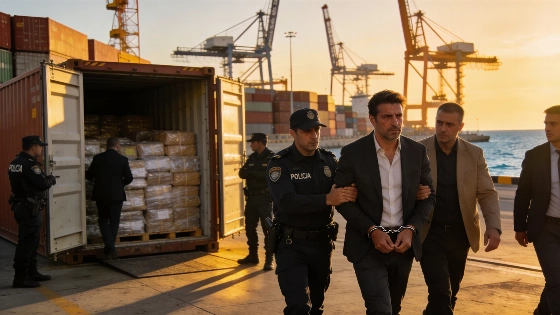
Drug trafficking network with police and port access uncovered in Valencia. Over 80 people have been detained at Valencia port in connection with the smuggling of 4.5 tons of cocaine. The network included port workers and even a member of the Civil Guard. Drivers were paid up to €120,000 per trip by the organization.
In the port of Valencia, police have dismantled one of the largest drug networks in recent years. According to EL PAÍS, the criminal group not only stored 4.5 tons of cocaine, but also had access to internal information from law enforcement agencies. During Operation Spider, more than 80 people were detained, including 17 port workers and a member of the Civil Guard.
The investigation revealed that members of the organization used encrypted applications to communicate and discuss details of shipments, reward amounts, and ways to bypass controls. In one message sent via Zangi, the logistics leader insisted that the group controlled all police units responsible for inspections at the port. This allowed them to plan cargo movements with minimal risk.
Investigators paid special attention to the payment system. Drivers transporting cocaine were paid between €100,000 and €120,000 per trip, and €50,000 for opening containers. Within the network, there were discussions that such high payments could result in drivers getting rich quickly and quitting. Sometimes, external carriers were hired for specific operations and paid separately.
Other schemes were also discussed in their correspondence: for example, an attempt to send 50 kilograms of cocaine to the north of the country or the use of drones to transport small batches. However, some of these plans were never implemented due to concerns that the police were already aware of their activities.
An important part of the scheme was integration into port infrastructure. The organization included not only dockworkers but also representatives of transport companies, unions, and even a doctor from the port Employment Center. Through fake exams, the drug network secured jobs in the port for its people, allowing them to control container movements and arrange necessary shifts.
Investigators are convinced that members of the group were warned in advance of possible arrests. In one of the encrypted chats, the arrest date was discussed, and participants advised each other not to keep evidence at home. Some drivers even spent the night in containers to quickly retrieve the drugs and avoid drawing attention.
The organization was also engaged in speculation: it bought cocaine at a low price and sold it later at a profit. In one episode, they discussed purchasing a batch at €13,500 per kilogram from a seller in Alicante. Within the network, it was noted that cocaine prices had dropped significantly compared to previous years, when a kilogram could fetch up to €40,000.
To conceal their activities, they used the 'blind hook' scheme: drugs were hidden in containers with legal cargo, and neither the sender nor the recipient knew of their contents. According to investigators, drivers prepared the containers in advance and tracked their movements using GPS trackers.
There are clear parallels with other cases in Spain: previously, in Almería, drug couriers also tried to escape pursuit by ramming a customs service boat — you can read more about this incident in the material about the chase off the coast of Almería.
According to RUSSPAIN, in recent years, Spanish ports have become key points for international drug networks. Such schemes often involve not only criminal elements but also legitimate port infrastructure workers. This creates additional challenges for law enforcement agencies and requires constant updates to monitoring and investigative methods.