Spanish Diplomacy During the Civil War: New Documents Reveal Details. A new publication in Madrid examines the role of Spanish diplomats during the Civil War years. Recently uncovered archives show who supported the Republic and who sided with the insurgents. The spotlight is on the influence of foreign powers.
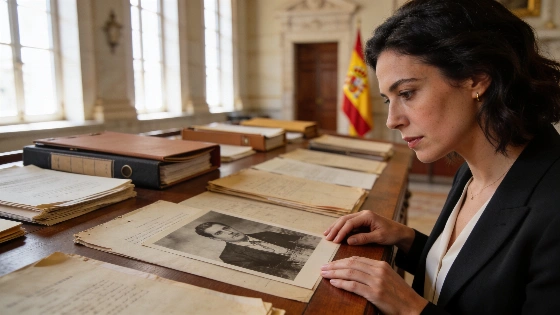
A major work titled “Al servicio de la democracia,” dedicated to the role of Spanish diplomats during the Civil War, has been published in Madrid. The authors reveal archival documents for the first time, showing how external forces and the actions of individual ambassadors influenced the course of events. The book, prepared under the direction of historian Ángel Viñas, draws on materials from national and foreign archives, official correspondence, and interviews to analyze why the diplomatic front became no less important than the military one.
Special attention is given to how monarchists and Franco supporters prepared in advance to secure support from Italy. Seventeen days before the uprising began in July 1936, contracts for the supply of military equipment and arms were signed in Rome with the Italian aircraft manufacturer SIAI. According to the authors, these deals were key to launching military operations. According to the book, Mussolini’s Italian regime was the first among European dictatorships to openly support the conspirators, hoping to establish a regime in Spain ideologically close to fascism.
The book provides a detailed analysis of the actions of Spanish diplomats in Rome and Berlin. In particular, the ambassador to Italy, Manuel Aguirre de Carcer, was forced to resign under pressure from supporters of the uprising, while the military and naval attachés were actively involved in negotiations with the Italian authorities. In Berlin, Ambassador Francisco Agramonte sided with Franco, as confirmed by previously unpublished correspondence with General Mola. In one of his letters, Mola directly thanks the diplomat for his “true Spanish behavior” and promises to use his connections in the interests of the rebels.
The diplomatic front in London proved to be just as significant. According to the authors, it was the actions of Ambassador Julio Lopez Olivan and several other diplomats that led the United Kingdom and France to insist on a policy of non-intervention. This decision effectively deprived the Republic of access to traditional arms markets and predetermined the outcome of the war. In the British capital, well-known monarchists represented the interests of the rebels, while the attempts by republican diplomats to change the attitude of London and Paris were unsuccessful. As a result, in February 1939, both countries officially recognized Franco’s government.
The book also reveals little-known episodes related to the actions of individual diplomats. For example, José Antonio Sangroniz, who was appointed as representative in Caracas, became involved in financial machinations and contacts with local Falangists. Despite the violations that were uncovered, there were no consequences for him—the regime's repressive apparatus targeted only Franco's opponents.
A separate chapter is devoted to Spain's first women diplomats. As early as the early 1930s, they were granted the right to work at the Ministry of Foreign Affairs, which was rare for Europe at the time. During the war and afterward, many of them, including Margarita Salaverría and Victoria Kent, were involved in evacuating children and assisting refugees. After Franco's victory, most female diplomats were forced to emigrate, continuing their professional careers in Mexico and Switzerland.
The influence of external players on internal processes in Spain in the 1930s still provokes debate among historians. As the authors note, support from Italy and Germany played a decisive role in the rebels' success, while the non-intervention policy of Britain and France effectively isolated the Republic. Questions of loyalty and betrayal within the diplomatic corps remain relevant today, especially against the backdrop of current international conflicts. Incidentally, how external factors can derail even major deals was recently reported in a story about the failed negotiations over the sale of a football club: details of the deal with Sevilla.
For context: In the 1930s, Spain became a battleground for various political and ideological forces in Europe. The Civil War of 1936–1939 led to the establishment of Franco's dictatorship, which lasted until 1975. During this period, the country was isolated from most European institutions, and many participants in the events ended up in exile. Questions of historical memory and assessments of the role of diplomats remain subjects of public and academic debate.