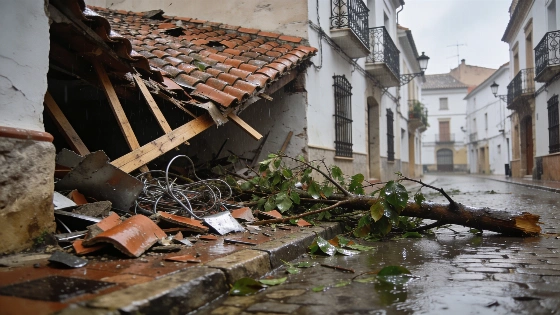
Alzira and several towns in Valencia’s Ribera Alta region are struggling to recover after a violent storm swept through on Thursday, 20 August 2026, leaving a trail of destruction. Winds reached up to 150 km/h, tearing off roofs and uprooting trees as power outages spread. A report by El Nacional journalist Adrià Asbert put the strongest gusts at nearly 150 km/h and said the storm affected the wider Valencian territory. Locals described it as unprecedented. The storm struck with such force that part of the roof of Santa Caterina, the city’s oldest church, was ripped away and thrown onto the street below.
Residents gathered in the city’s basic square on Friday morning to see the aftermath. Many were shocked by the scale of the damage, with some describing the event as a deluge of water and wind unlike anything they had experienced before. Acting mayor Enric Montalvà recounted how the storm battered the town hall and nearby historic buildings. Even century-old trees were split by the force of the wind. No injuries were reported, as most people were outside when the worst of the storm hit.
In the surrounding Ribera region, known for its citrus and persimmon crops, the agricultural impact is already being felt. Local farmers reported that winds exceeding 140 km/h stripped leaves from fruit trees and caused impressive losses, particularly in persimmon production. The agricultural union Unió de Llauradors confirmed that a large area of crops was affected, raising concerns about the upcoming harvest.
Power outages were widespread, with entire streets left without electricity after falling debris damaged cables. In some homes, residents remained without power into Friday. Municipal crews worked through the day to clear fallen branches, some weighing up to two tons, from public roads and assess damage in cemeteries and other public spaces. In Carcaixent, just 10 kilometers from Alzira, authorities closed parks and green areas for cleanup as technicians from Iberdrola worked to restore electricity.
The storm also disrupted traffic on major roads, including the Cullera-Sueca highway, where heavy rain reduced visibility to near zero. Urban streets flooded, making driving hazardous. In Cullera, temperatures dropped sharply from 36°C to just over 19°C as the storm passed. Coastal areas such as El Perellonet, a small beach community near L’Albufera, were also hit hard. Residents said balconies collapsed and outdoor furniture was blown away in a matter of minutes. Despite the chaos, the beach itself was quickly cleaned and reopened to visitors.
In Sueca, the basic damage was to trees, with piles of trunks and branches awaiting removal by municipal trucks. Some residents had received weather alerts earlier in the day and took precautions to protect their property from hail and wind. Reports also indicated that rice fields in the area suffered damage from the strong gusts.
Events like this are not isolated. Recent analysis by russpain.com found that similar downbursts have caused impressive destruction in Valencia province in recent years, highlighting the growing impact of extreme weather on local communities and agriculture.
Spain’s Mediterranean regions are increasingly vulnerable to sudden, intense storms, especially during the summer months. Ahead of the storm, forecasts pointed to a sharp change in the weather, with a risk of intense rainfall and thunderstorms. Local authorities continue to urge caution and are working to restore normality as quickly as possible. The full extent of the agricultural and infrastructural damage will become clearer in the coming days as assessments continue.