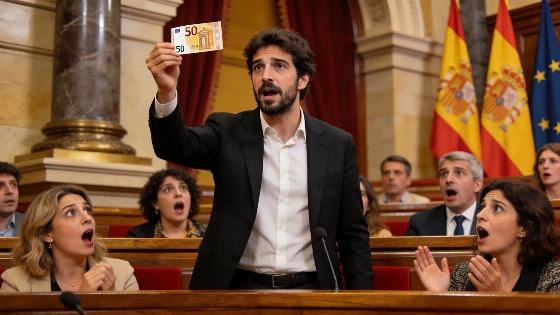
Exaggeration is becoming a defining feature of Spain's political discourse, as ultra-populist rhetoric pushes hyperbole into the mainstream. In recent parliamentary sessions, statements once considered outlandish have become commonplace, reflecting a shift in how politicians communicate and how the public perceives political reality.
The trend was clear in a recent session of the Catalan Parliament, where president Salvador Illa described Pedro Sánchez as “the best president Spain has ever had.” Sweeping declarations like this, with no clear criteria or historical context, show how even traditionally moderate figures are adopting hyperbolic language. Superlatives overshadow substantive arguments, and attention shifts from evidence to impact. At a Socialist event, Illa used similarly binary language, framing the choice as “Either the PSC and progress or Feijóo and regression,” and urging supporters to let “the veteran” take the penalty. The sporting metaphor and stark contrast turn complex alternatives into memorable slogans.
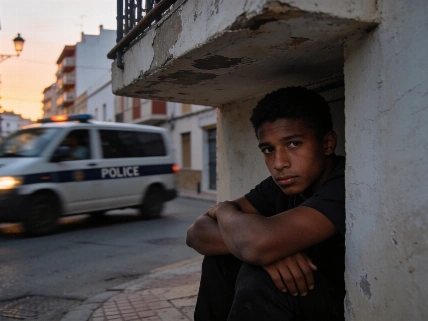
Ultra-right parties, particularly VOX, have helped normalize this style. Their approach often amplifies isolated incidents and presents them as signs of broader crises. For example, VOX leader Ignacio Garriga recently compared Barcelona's security situation to that of Ciudad Juárez, a city known internationally for its high crime rates. Though widely seen as unfounded, such statements are designed to provoke strong reactions and dominate headlines instead of offering concrete solutions.
Hyperbolic language is spreading across the political spectrum. As rhetoric intensifies, other parties and politicians adopt the same pattern and respond with dramatic claims of their own. Catalan PP leader Alejandro Fernández, for instance, said housing had “collapsed,” and extended his criticism to trains and roads, education and public order. Such broad characterisations bundle distinct policy areas into one crisis narrative, even though each claim concerns different conditions that can be assessed separately.
Security debates show the gap between sweeping claims and specific indicators. Illa has said security in Catalonia improved over the preceding two years, while acknowledging increases in firearms and drug trafficking and crediting some of the improvement to a greater presence of police and Mossos d'Esquadra. Barcelona data also show sharp differences among districts: in 2025, violent robberies stood at 2.54 per 1,000 residents in Sarrià-Sant Gervasi, 8.5 in Eixample and 36.14 in Ciutat Vella. The latter rate is affected by the district’s large tourist population, which is excluded from the resident count. These figures do not settle political arguments about safety, but they show how broad claims about an entire city can hide impressive local differences.
Other indicators extend the picture beyond street crime. Spain’s Interior Ministry reported that cybercrime accounted for nearly 20% of all crime in 2025. Authorities recorded 383,285 victims, up 9.3% from the previous year, while Catalonia logged 73,400 cybercrime incidents. Meanwhile, the Fiscalía General del Estado reported 7,110 proceedings initiated for illegal entry into properties in 2025, down 16.9% year on year. These figures cover different offences and legal processes, showing why politicians need to specify what they are measuring when making claims about public safety or crime.
Observers say this shift is weakening parliamentary debate. Instead of trading well-supported arguments, politicians increasingly rely on catchy phrases that spread easily across digital platforms and social media. Facts often get lost beneath competing narratives, and the line between reality and exaggeration grows blurred.
Spain's experience reflects a broader trend in several democratic countries, where populist movements use language to influence public opinion and set the agenda. The so-called Overton window, the range of ideas considered acceptable in public discourse, has expanded to include topics and tones once seen as marginal. This linguistic shift could have long-term consequences for how citizens engage with politics and how institutions function.
Recent studies suggest that hyperbole in political communication can weaken trust in institutions and make it harder for voters to distinguish genuine problems from manufactured crises. Some argue that data and factual rebuttals can counter misleading claims, but exaggerated statements persist. Spain's changing political language may continue to shape debate and decisions in the country in the coming years.