Hyundai’s UK model page lists the Bayon hybrid for 2027, but the company has yet to confirm sales timing or publish full technical specifications. The new generation also grows in size and gains cabin equipment associated with larger vehicles.
The hybrid is the biggest change beneath the more upright styling. It pairs a 1.6-litre petrol engine with an electric motor, while a six-speed dual-clutch automatic gearbox handles shifts. Hyundai also plans adaptive regenerative braking, adjustable through steering-wheel paddles. Final consumption and emissions figures have not yet been homologated. Kolesa reports that the new Bayon retains front-wheel lead.
The petrol range starts with 1.0 T-GDI engines rated at 90 hp or 115 hp. Buyers can pair them with a six-speed manual or a seven-speed 7DCT automatic. Target CO₂ emissions are 102 to 113 g/km for the hybrid; petrol versions are targeted at 134 to 149 g/km, depending on specification. The previous Bayon came with petrol and mild-hybrid powertrains, while the new generation is set to add a conventional full hybrid.
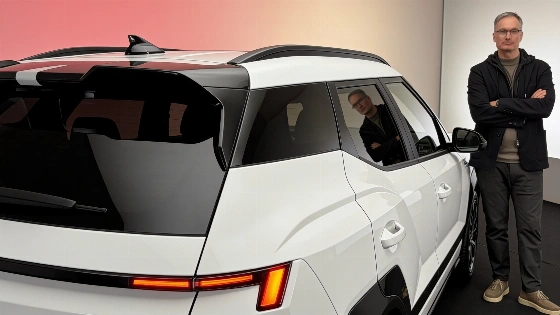
Hyundai presented the new generation at the Paris motor show in 2026. The Bayon began as the entry point to its SUV range, below the Kona. It now measures 4.245 metres long and 1.81 metres wide, with a height of 1.57 metres and a 2.60-metre wheelbase. Its larger footprint keeps it in the compact-SUV class.
Motor1 Brasil reports that the first European deliveries are expected in the first quarter of 2027, with petrol versions due to arrive before the hybrid. Hyundai has not confirmed final sales dates or prices on its UK model page.
The cabin makes the clearest case for the upgrade. Depending on trim, the dashboard can carry two 12.3-inch displays: one for the digital instruments and the other for the multimedia system. Wireless Apple CarPlay and Android Auto are available, along with wireless phone charging and USB-C ports. Higher trims can add an eight-speaker Bose system alongside Hyundai Digital Basic 2.
Front seats can be heated and ventilated. The equipment list also includes dual-zone climate control, while a panoramic opening roof is available. For rear passengers, the back seats recline and rear-seat heating is available. Dedicated air vents sit behind the front seats, and a central armrest adds cupholders.
Hyundai is also preparing an N Line version with 18-inch wheels and a black roof, complemented by sportier interior trim. A fuller SmartSense package can include Highway Driving Assist 2 alongside blind-spot monitoring, a surround-view monitor and rear cross-traffic collision avoidance.
The Bayon’s focus on compact urban driving has a parallel in Citroën’s city-car concept, though Hyundai is taking a different route with its planned hybrid. Moving from mild hybridisation to a conventional HEV gives the model a more large electrified option as competition in the small-SUV class intensifies.
Hyundai says the European-market Bayon will be built at its plant in Türkiye. The company has not announced Spanish prices or a firm dealership arrival date. Final emissions figures are also pending.