The Hyundai Tucson HEV remains a top contender among compact SUVs, thanks to its spacious boot, refined ride, and practical hybrid system. We examine what keeps it ahead of rivals and where it stands in the Spanish market.
With 4.52 meters in length and a reputation for reliability, the Hyundai Tucson HEV continues to attract Spanish buyers in 2026. Now in its fourth generation, this compact SUV has held its ground as one of the best-selling models in its segment, offering a blend of practicality and comfort that few competitors match.
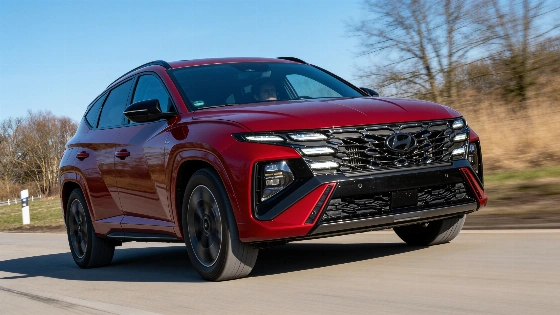
Hyundai has updated the Tucson’s exterior with a new grille, blacked-out logo, and revised headlights, though its overall design still leans toward a classic, understated look compared to some of its flashier rivals. The real transformation, however, is inside: the cabin now features two expansive 12.3-inch screens, replacing the previous 10.25-inch displays, and a welcome return to physical buttons for key controls. The gear selector in automatic versions has moved to the steering column, and the three-spoke steering wheel is borrowed from Hyundai’s latest models. Material quality and fit remain high, giving the interior a premium feel for its class.
Space is a clear strength. Both front and rear passengers enjoy generous room, with the rear seats offering adjustable backrests, retractable sunshades, dual-zone climate control, two USB-C ports, and multiple storage options. The only notable omission is the lack of sliding adjustment for the rear bench, which could have added even more flexibility.
Where the Tucson HEV truly stands out is in its boot capacity. Despite the hybrid system, the luggage space measures an impressive 616 liters—just four liters less than the petrol version. The boot’s regular shape and low loading lip make it especially practical for families or anyone needing to transport bulky items.
Under the hood, the Tucson HEV combines a 1.6-liter petrol engine (179 hp) with a 65 hp electric motor, powered by a 1.49 kWh battery. Together, they deliver a robust 239 hp and 380 Nm of torque, resulting in strong acceleration and smooth transitions between power sources. The switch from electric to petrol is barely noticeable, except for a subtle engine note that never becomes intrusive. Fuel consumption is competitive, typically ranging from 5.4 to 6.4 l/100 km in mixed driving.
On the road, the Tucson HEV impresses with its quiet cabin, refined ride, and well-balanced suspension. It absorbs bumps and rough surfaces with ease, yet maintains composure in corners without excessive body roll. The steering is precise and appropriately weighted, contributing to a confident driving experience. Hyundai’s work on the braking system deserves mention: the pedal feel is natural and progressive, avoiding the vague initial response common in many regenerative setups.
Standard equipment is generous, including a 12.3-inch infotainment screen with wireless Android Auto and Apple CarPlay, keyless entry and start, and dual-zone climate control. Pricing for the Tucson HEV starts at €40,775, positioning it competitively among hybrid SUVs in Spain.
For those comparing options, the Tucson HEV’s combination of space, comfort, and hybrid efficiency keeps it at the top of its class. Its approach contrasts with models like the Mercedes GLC 400 EQ 4Matic, which emphasizes luxury and electric range, as explored in this recent analysis of premium electric SUVs.
Looking ahead, Hyundai’s focus on practical design and user-friendly technology continues to resonate with Spanish drivers. The Tucson’s enduring popularity suggests that, even as the market shifts toward full electrification, there remains strong demand for well-executed hybrids that deliver real-world benefits without compromise.