With 40 days until Spain's 29 November general election, the left remains divided after coalition talks failed and polls favour the right-wing bloc. Donald Trump has accused the government of doing nothing about July's immigration arrivals.
The Supreme Court has given the parties until 3pm on Wednesday 21 October to respond on implementing a provisional suspension of votes by some naturalised citizens. The case concerns people covered by the so-called ley de nietos who cannot prove descent from exiles. The dispute centres on the application of the first section of Additional Provision 8 of Spain's 2022 Democratic Memory Law, which provides a route to citizenship for some descendants of Spaniards affected by the Civil War, dictatorship and exile.
The question came from the Central Electoral Board (JEC), which plans to send election documents to everyone registered in the Census of Spaniards Resident Abroad (CERA) between 24 and 30 October, accompanied by a warning that some recipients may be unable to vote because of the court-ordered suspension. The measure concerns a specific group of naturalised citizens registered abroad, not everyone who acquired citizenship under the ley de nietos. Government figures submitted to the court put the number potentially affected at 163,020 people on the CERA register as of 1 August 2026. That deadline is the next legal milestone in a dispute affecting part of the electorate. The State Legal Service, prosecutors, Vox and Iustitia Europa are among the parties participating in the proceedings.
The Supreme Court first imposed the suspension in September and upheld it in October. It covers new CERA registrations and the electoral effects of existing registrations within the scope of the case; people may be exempt if they individually establish that they meet the requirements through the court's certification procedure. On 20 October, a Spanish citizen of Argentine origin who obtained citizenship under the law also petitioned the Constitutional Court for urgent relief that would allow him to vote on 29 November. His application was joined to the ombudsman's challenge to the Supreme Court's measures. The constitutional challenge had not yet changed the suspension, leaving the status of the potentially affected voters unresolved.
Spain's general election is 40 days away, but the left has failed to agree on a broad coalition. Frente Amplio will share Congress lists with Podemos only in the Canary Islands and the Valencian Community. For Senate lists, it will join the PSOE, Compromís, Chunta Aragonesista and Batzarre. The PP and Vox are negotiating a possible joint Senate deal; a previous Senate list report covered the parties' talks.
Polls give the right-wing bloc an advantage, although estimates vary. A Sigma Dos poll published on 19 October projected 31.5% of the vote and 136 seats for the PP, and 19.5% and 65 seats for Vox. An average of 16 polls put the PP at 31.7%, the PSOE at 26.8% and Vox at 18.6%, projecting 204 seats for the PP and Vox combined. By contrast, a CIS poll reported by ABC put the PSOE at 34%, 11.8 percentage points ahead of the PP. Donald Trump also entered the campaign debate, telling reporters at the Oval Office that Spain had been suddenly and massively invaded by immigrants arriving in July and accusing the Spanish government of taking no action.
Frente Amplio has settled its leading candidates in Madrid and Barcelona. Ada Colau will head the Barcelona list and run as the coalition's candidate for prime minister, with Ernest Urtasun in second place. Emilio Delgado will lead in Madrid, followed by Tesh Sidi; Toni Valero is third, and the fourth place is reserved for Movimiento Sumar. Frente Amplio still had to choose its lead candidates in Andalusia, Aragon and the Balearic Islands.
Podemos plans to run its own lists except in the Valencian Community, the Canary Islands and Catalonia. Irene Montero will lead its Madrid list. Pablo Iglesias criticised the decision to put Valero third in Madrid instead of giving him the lead in Andalusia. He also regretted that Podemos and IU had failed to reach an electoral agreement there, while defending Podemos's pact with Esquerra Republicana de Catalunya.
The PP has named Ana Vázquez as its lead candidate in Ourense. She is under investigation after displaying pepper spray during a Congress plenary session on 23 September. Miguel Tellado will head the list in A Coruña. Julio García Comesaña is the candidate in Pontevedra, while Francisco Conde will lead in Lugo. In Murcia, the party has chosen its deputy group spokeswoman Miriam Guardiola, who was fifth on the PP list in the 2023 general election.
The Council of Ministers has approved the replacement of six government delegates who will stand on PSOE lists. José Crespín replaces Carlos Prieto in Catalonia, and Isabel Mayo replaces Pedro Fernández in Andalusia. Cecilia Pérez takes over from Adriana Lastra in Asturias. Rogelio Llanes replaces Pilar Bernabé in the Valencian Community; Noelia Herrero replaces Fernando Beltrán in Aragon; María Teresa Macías replaces José Luis Quintana in Extremadura.
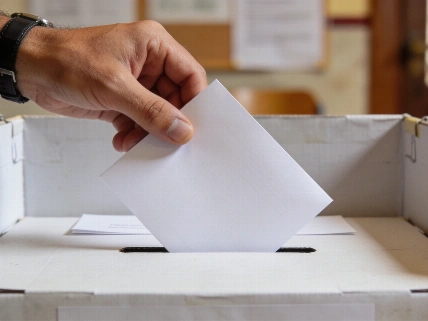
Vox leader Santiago Abascal said his party would seek a clean and transparent election, urged voters not to rely on polls and called on them to vote. He connected his warnings to a review of the electoral register of people naturalised under the ley de nietos, saying Vox would report any irregularity.
In Aragon, PSOE secretary general Pilar Alegría said a PP-Vox Senate pact would not surprise her, arguing that the parties share an ideology and a project. She also defended the Senate agreement between the PSOE, Chunta Aragonesista and Izquierda Unida.
Jordi Turull welcomed the Supreme Court's application of the amnesty law as a capitulation and said it should have applied from the day it came into force. He said he would not be fully satisfied until it also covered Carles Puigdemont, Lluís Puig and Toni Comín, and maintained that the political conflict remained open.